The Infinite Loop of Capital
1. The money comes from a source somewhere, that is, some bullshit company has money enough to pay someone to do a bullshit job in tech, finance or maybe the killing kids for strategic gain industry (defence).
2. Because (1) companies get in line to fill that job (those are the recruitment companies) and they get paid for doing so.
3. Then, there are people who specialise in filling jobs for people who fill the initial jobs (those are the rec2rec companies).
4. Then there are those good at knowing the people who can do the second job (those are the rec2rec2rec companies).
I mean where does it end? What, and capitalism breeds innovation? Now, for fun, imagine that you are doing that rec2rec2rec job inside of a Wework. In infernum ingredere.
Wework to Die
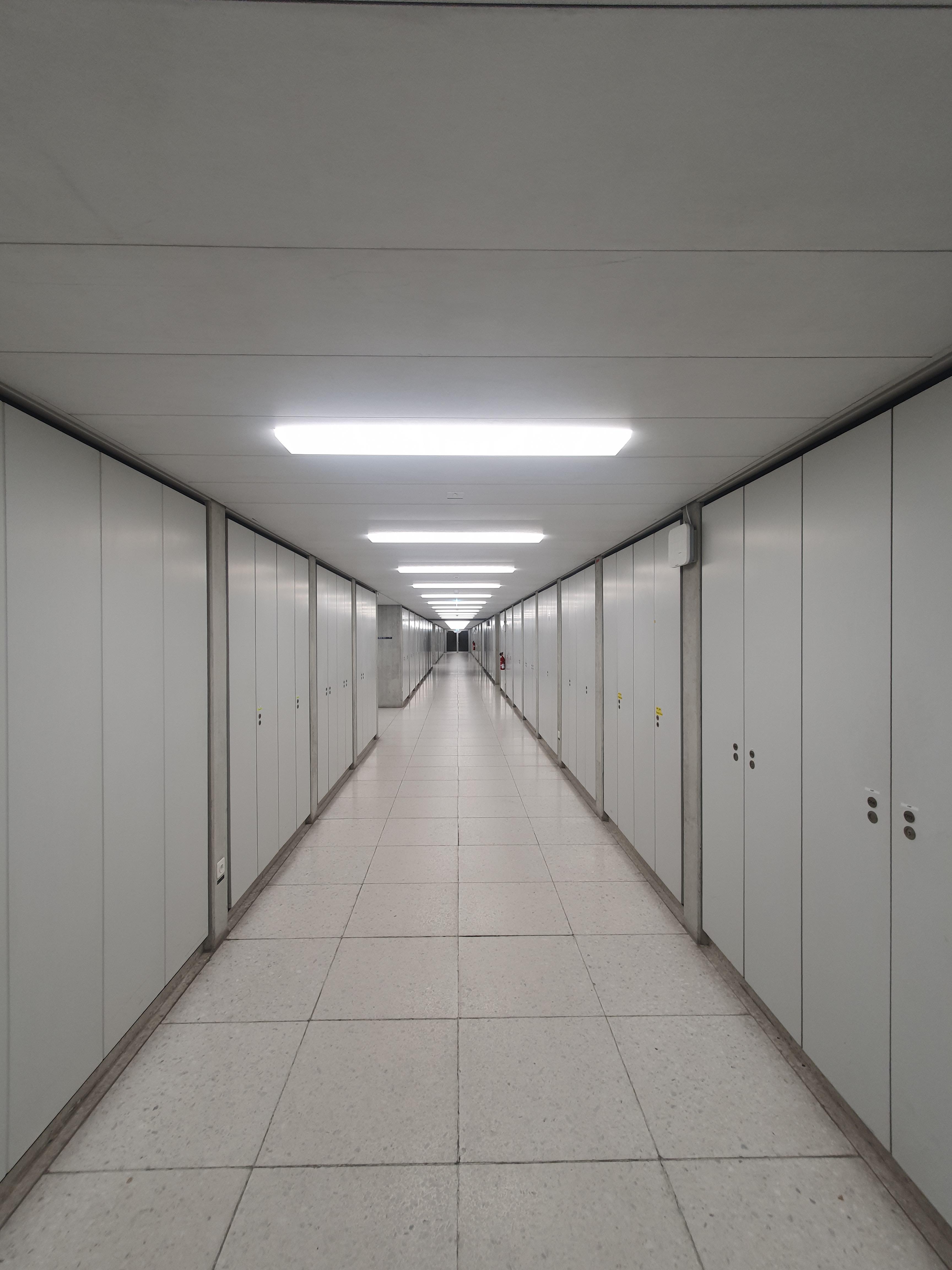
If you don’t know what a Wework is, lucky you. Genuinely. You are one of the lucky ones. According to a quick Google search there are 36 Wework’s in London. For me personally, that’s 36 too many. Really the Wework is just an office space, but to me… to me it represents so much more. Now, a Wework is itself a meta-entity because it is a business that provides a roof for other businesses to do business. It is what my friend and colleague Rob {MA} calls “one of capital’s many temples”. When you go to a Wework to work, it feels like a bad acid trip. First, there is no fucking “we” at work when you work at a Wework, so you can start by jotting that down. Second, inside the Wework everything you expect to be different is the same in a different colour. I guess you can think about a Wework as a self-enclosing fractal, looping in on itself eternally. But not in the hippy dippy “peace and love”/ “we are all one” kind of way. Imagine instead that some Gnostic demiurge has artificially programmed a pattern into the core of the Wework that corrupts the inner harmony of the human soul. This demiurgic pattern has the logic of a cancer designed only to cancel difference. And the pattern is spread from creature to creature by osmosis becoming a contagious spiritual cancer that is programmed to convert the other into the one, difference into the same. If you go onto the first floor, it is identical to the second, the third, same as before, the fourth and so on. But the way she is the same is different, like the very attempts to make it different make it more the same. It feels like someone has underwent a non-attempt to make each floor different. For example, there are cups with different corporate phrases on each floor. On floor one, the cups might say, “go get em tiger” but on the second floor they might say “just do it” instead. Or, instead of a pool table in the left-hand corner by the elevator on floor two, there is a ping pong table in its place on floor four. And then if you go into the rooms that people work in; it’s the same people in all the rooms who are trapped in their same client-company relationship, calling the clients their dad god, on their knees with they mouth open. But I don’t want to be mean to my human friends, for they are “trapped in the belly of this horrible machine, and the machine is bleeding to death.” (Godspeed You! Black Emperor, “The Dead Flag Blues”.)
Marxists
For the remainder of this article, I want to creatively analyse what a worker becomes when they work in a Wework as a consultant for a client with clients. Marxists always want Marx to continue to be right no matter the shift in context. I guess that’s football for you. For some Marxists, Marx gets turned into a prophetic figure detailing where capitalism is going and how it ends, dialectically. And because Marx does dialectics, inspired by how Hegel does dialectics, Marx will sometimes push the envelope that says Capitalism will end, necessarily.
Marx does foresee the collapse of capitalism1. And his arguments for that end rest on arguments about how capitalism works and the contradictions inside of it. He provides descriptions about the players within the capitalist system, what they are, who they are, who they think they are, how they interact with other players who are alike and unlike them, economically speaking.
There has always been, for me, a logical contradiction in the claim that a self-consistent materialism could play ball alongside the modal concept of necessity or teleology, understood correctly. And so, it has always been weird to talk about an “end to capitalism” or a meaningful progression to history if you are a in the non complicated way that Marx was a materialist. I will be quick explaining why. Marx doesn’t profess to be a metaphysician, but he does assume a metaphysics. The world is not spiritual for Marx, it’s not mental. The world for Marx is a complicated web of physical processes where economic activity is primary. There is no God. There is nothing special about humans, they struggle within economic systems that live and die. History marches on. The human being has no epistemological supremacy over what she knows, the world does not conform to the categories she might use to understand it. Marx is structurally a materialist, human beings are material, the societies they live in are material, everything is reducible to material stuff, not epistemological stuff, or spirit, or anything of that sort. So, Marx wants to analyse modes of economic organisation (feudalism, capitalism, mercantilism, etc), he wants to understand what a worker is within those systems, and he wants to understand the contradictions that arise as a result of how those systems are organised i.e., who gets to own the means of production in a system and what that means for them. His work tracks how economic systems develop, how labour relations change, how the kind of labour the human being does changes, and how the systems evolve into different systems. He uses a form of dialectics to tell this story. Historical materialism helps us understand how some economic systems survive and create new societies and how others die. The question I always have is, how do you get a material system to partake in necessity, or in teleology in the strict sense? Like, where are the arguments in Marx for how an economic system must behave in X way due to the features of its players, or the resources available to it, or the contradictions inherent in it etc. I have always thought that a fair critique of Marx is always to question how he can be teleological, or employ concepts like necessity, if he simultaneously commits to the strictest 19th century materialism {Sayers, 2019}. To be fair to Marxists, they might just say one of two things. First, they could say, here are my arguments for how I can be a materialist that talks about necessary movements and developments inside of a material system {enter Deleuze}. But I would say in that instance you start being a different kind of materialist to what Marx professes to be. Second, Marx could come back from the dead and say that he never spoke about teleology or necessity in the strict logical sense which means the dialectics move arbitrarily but it's still interesting as a kind of game theory.
TLDR: don’t predict the end of capitalism if the end cannot be proven to be a necessary outcome of something inherent to that system. If nothing about the system is necessary, if it's all arbitrary materialism in the first place, how can it have necessary and predictable outcomes? Again to be fair to the old man, Marx doesn’t seem that interested in being a self-consistent philosopher. In The Communist Manifesto, he sides with practical action over and above scholarly ramblings. And this I have no qualms with, my point is always, if you are on the left never assume this economic system will crumble under the weight of its contradictions and wait for that to happen, let the contradiction exercise you into doing something.
Anyway, let us try to describe what is going on if you are a consultant, working in a Wework, delivering to clients. What is capital making you do? What is capital? And contra Marx, why does it seem that capitalism is able to contain its contradictions, forever and ever? Above I have criticised the Marxist framework broadly in that I am concerned the story he tells has no proof of necessity whilst also offering predictions and movements that have the veneer of necessity. We are now about to see how far Marx can help us understand how badly fucked work is if we work in a Wework as a consultant in London in 2026.
An Illegal Alien, as Dad Says
To start, Marx still gets a lot of stuff right when we look at things from the angle of the worker’s alienation. Many thinkers like Zizek, Harvey, Varofaukis and more, have wanted to take Marx out of the 19th and see how he holds up in the 21st. Quite a lot of what the French post-structuralists are doing is also about making Marxism compatible with the latter half of the 20th century too (I will just leave that to hang there but Foucault is a perfect example of this, I won’t expand on this here, but Foucault saves Marx, philosophically/ source: trust me bro).
What Marx means by alienation is still contested when we think about it qualitatively. Generally it means a separation from something between two things otherwise meant to be connected. It also often includes the accompanying pain felt due to that separation. In the economic/social context it gets ascribed to at least four things central to being a worker:
“(1) Alienation from the product of labor {...} (2) Alienation from the process of labor {...} (3) Alienation from one’s self or “species-being” {...} (4) Alienation from others{...}.” {Graves, 2022}.
So back to the Wework. You are a consultant, you have clients who themselves have clients. I would say the alienation of (1), the product of labour, is more extreme than Marx had it back in the middle of the 19th century. I want to be clear, my argument is not to say that being a worker is worse now, but I think labour alienation has intensified. This is mostly because, in the context of a consultant, nobody is building anything, there is no product, or if there is, the product is non-tangible. The product might be a person, another business, a way of looking at things (literally), some fucking spying system, whatever. Often, the product is the service you sell to the client, whatever that service might be. But then as I say, it flips on itself, because your service is actually only valuable to the client because it helps strengthen their service to theirs, so alienation becomes kafkaesque in some sense. As a result, the product of your labour is not something you can see or enjoy, it's abstract in that you don’t get to see an outcome because the outcome exists away from your labour, your labour-value gets cashed in further along a chain that is invisible to you. It is kafkaesque because value, the why of your labour, is invisible to you. It never finishes, obviously, you never see the product of your labour because you do not labour away for something that could finish. I largely agree with the following from Graves:
“{C}ontemporary Marxist thinkers widely agree that alienation remains a pervasive condition, though it manifests in updated ways” (Graves, 2022, Monibot, 2023).
But my argument above is that alienation persists not just in an updated way, it intensifies. First we are alienated from the outcomes of our labour just like a Manchester Mill worker, but we also have to contend with the fact that we cannot be said to be making a product, anyway.
The Wework is not a place, it's a void hollowed out by capital. I think Mark Fisher killed himself before we got Wework’s but if you put him in one he’d freak the fuck out, “fershure” {Macron, 2026}. I am not opening Capitalist Realism again, sorry Mark. I think I remember reading in it something about the experience of driving down motorways. When you drive down them you are on every motorway, when you go past service stations they are all the same, there is nothing to authenticate the experience of driving down the motorway. On the motorway you are nowhere and everywhere. Same with airports, same with train stations. His analysis is that capital creates artificial repetitions of itself. It does this due only to its relatively simple logic. Capital creates a path of least resistance: it figures out the cheapest yet most profitable thing to do, and then pastes that all over the earth to generate revenue. This is why every cool and hip part of London looks like every other cool and hip part of London, someone worked out a formula and spunked that shit all over our city. We, the human race, live inside of capitals copies of itself, we live inside a world hollowed out by the logic of capital. That logic is simple, capital's axiom is thus: “generate as much profit for you for the least amount of cost to you”. The other example you can think of that applies are those red brick “new builds" you get everywhere in the UK. Basically they have built nuketown villages for people to live in here. They look terrible and are a meme now. If you bought one you might as well not include your postal address because you now live in a non-place. Fisher’s observations here can help us understand that the Wework is capital's ultimate temple. It is an extreme version of the motorway and the new build. Why? The Wework is the capital's ability to repeat itself as a space for people to submit to capital inside. The Wework is a business which is really just a buying of a space that houses other businesses doing their business, in all the rooms, and on every floor, everybody is reproducing capital’s logic in a space which is itself evidence of capital’s logic repeating itself. As Godspeed said earlier: we are trapped in the belly of this horrible machine, and the machine is bleeding to death.
1 Maybe that word collapse generates the wrong image, to be clear Marx predicts that the working class will find socialism, where the workers own the means of production, a classless kind of society.
Graves, Kenneth, Contemporary Perspectives on Marxist Alienation – Letters from Tomis.
Godspeed You! Black Emperor, "The Dead Flag Blues": https://youtu.be/XVekJTmtwqM .
Laver, M. George Monbiot and Peter Hutchinson, The Invisible Doctrine: The Secret History of Neoliberalism (and How It Came to Control Your Life). Soc 62, 573–575 (2025). https://doi.org/10.1007/s12115-024-00997-3.
Marx, Karl. Collected Works. 50 vols. New York: International Publishers, 1975–2004.
Marx, Karl, Karl Marx: Selected Writings, second edition, David McLellan (ed.), Oxford: Oxford University Press, 2000.
Sayers, Sean. “Marx and Teleology.” Science & Society, vol. 83, no. 1, 2019, pp. 37–63. JSTOR, https://www.jstor.org/stable/48556884. Accessed 27 Jan. 2026.