
Author’s Note: I have referred to all authors in this piece by their first names. I do this as a deliberate act of desimulation. It operates as a reminder that behind the simulated idea of ‘Emily Brontë’ and ‘Jane Austen’ there was a woman named Emily, and a woman named Jane.
The way in which culture engages with hyperreal texts diverges on gendered lines. Two recent examples of this; Bridgerton and “Wuthering Heights” exist as hypersimulated perversions of reality. In this case, that reality is the minds of 19th century female authors. Hyperreality in this context exists to veil the lived experiences of historical women – that is not applied in the same fashion to historical men.
In this article, I would first like to discuss Jean Baudrillard’s ideas of hyperreality, how Bridgerton and “Wuthering Heights” operate as extreme examples of this process, and finally how this process distorts the reality of Jane and Emily’s minds, in a way that society only finds acceptable when the victims are women. This gendered cultural violence is indicative of the marginalisation and invisibility of historical women more broadly.
We live under the sheltering coat of hyperreality. Society exists as a succession of zoetropic images – that produce spectacle that is but an imitation of reality, whilst bearing little evidence of reality’s once obvious presence. Reality persists only as fingerprints on the glass.
Culture’s increasing complexity requires the increasing preponderance of signs as a means of simplifying that complexity. Baudrillard speaks of three orders of signs: the real, the referent and the hyperreal.
The hyperreal, the simulacra, is where “It is no longer a question of imitation, nor duplication, nor even parody. It is a question of substituting the signs of the real for the real” . This is the post-modern world in which we all exist. Look at the concept of the ‘romantic’. Its origin is Romance language, and the ‘romance novel’ in vernacular language as a contrast to formal Latin. It then takes on a second order meaning, relating to a movement professing the virtues of feelings and emotion over what was perceived as stuffy enlightenment. By our modern hyperreal present romantic only refers to itself, and has lost its core of broader philosophical and real ideas, instead becoming a singular meaning of love and relationships et al. (which are also pure nonreal signifiers). The hyperreal concept has all the trappings of reality, with expected behaviours, books, colours, rosettes, and a manifesto, but has lost all definition. It’s a Christmas song because it features sleigh-bells.
It’s natural to mourn this loss of the real, but it’s also important to note that this process is not linear. Culture is not Pokémon evolutions, where society upgrades from modern to postmodern as soon as we start Waiting for Godot. Instead, society is best understand as a vast lake containing liquids of many colours. Pre-modern, modern and postmodern texts exist simultaneously in different parts of the lake, as does the differing philosophies of members of that society. The same work can be understood in a real and hyperreal fashion simultaneously, even within one observer. Human work is complex, and is able to exist on multiple paradigms and levels.
There are two specific examples of hyperreal texts I would like to draw attention to. The first is Bridgerton (2020-2026), created for Shondaland by Chris Van Dusen, and based on the novels by Julia Quinn. The second is “Wuthering Heights” (2026), adapted by Emerald Fennell from the book by Emily.
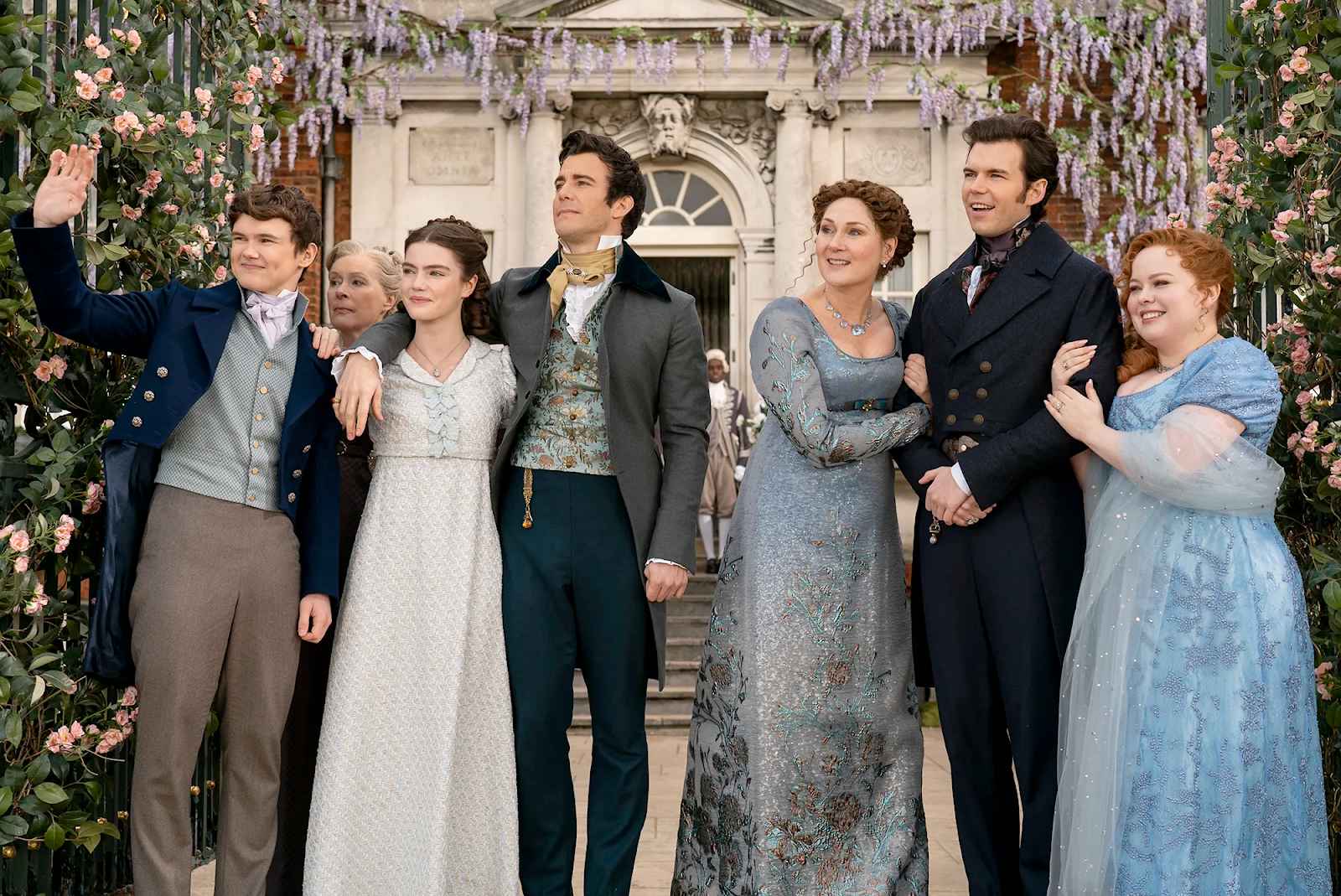
Bridgerton is metamodern hyperreality at its most blatant. The series takes clear inspiration from the work of Jane (Austen). However, rather than the books themselves, the Bridgerton series was written in the context of Austen revivalism in the 1990s and 2000s, for example the 1995 Sense and Sensibility adaptation by Emma Thompson, the 1995 TV and 2005 film adaptation of Pride and Prejudice, and the 1996 Emma adaptation by Douglas McGrath. These adaptations, while fantastic (I watch Sense and Sensibility with my mother every Christmas), were already a modernised re-interpretation of the original work. The ‘romantic’ elements of the novels are placed forefront, and the harshness of the period, most clearly its masculinity, is softened. In Sense and Sensibility (1995) Hugh Grant’s Edward and Alan Rickman’s Colonel Brandon are made more feminist friendly ‘New Men’™™™™. It is these adaptations that form the new signifier of the period and of the Type of Story that Regency Romance novels are evoking.
The Bridgerton TV series goes beyond the Regency Romance roots of the novels – most obviously in its colourblind casting, but also in the choice of costumes, setting, and soundtrack. Characters wear bold, colourful, modern-feeling, grotesqueisisations of Regency fashion, whilst the soundtrack plays baroque string versions of hits by Taylor Swift, Calvin Harris and Billie Eilish. These are not meant to be understood as sincere aspects of the world, but instead an ironic detachment to the material itself. This swinging, bipolar aspect makes Bridgerton a clear example of the metamodern, which is characterised by wild swings between irony and sincerity, without ever committing to either. It possesses neither the full ironic detachment of postmodern works nor the sincere optimism of modernism, but a mangled combination of the two. This doublethink is most apparent in its attitude towards racial equality. It simultaneously suggests that racial harmony is something easy and achievable, even in Regency England, something deeply optimistic and sincere, whilst also presenting an ironic detachment and awareness that these ideas are naïve. Bridgerton is not ‘telling a story’ in the traditional sense, but delivering on the hyperreal promise of ‘Regency Romance’. It is fully aware that it is not real, and the audience are not expected to engage with it on a real level.
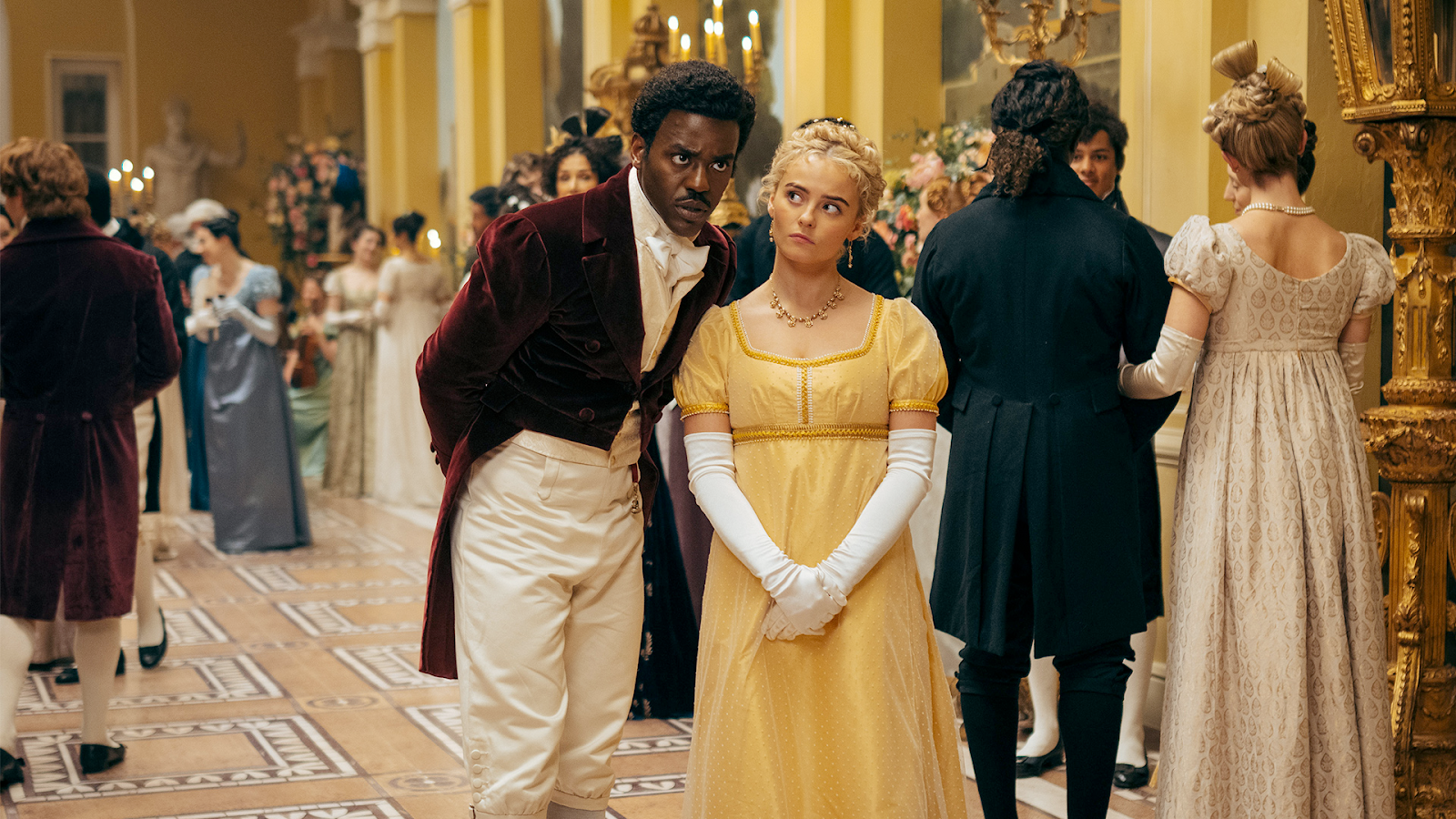
There is, as always, a capitalist dimension to this. As stories fit into a market system, hyperreality is a useful tool for selling the ideal of storytelling, without the more complicated reality. The shared understanding of Bridgerton as hyperreal object is comforting. We are safe in knowing that Daphne and Lord Hastings will end up together, because it’s a Regency Romance. The ‘playing space’ of this story is a known entity, and we need not worry about actors jumping off the stage and knocking over our popcorn and large soda. We can enjoy the conflict and drama of the story within its expected confines. This turns it into a reliable product to be sold. The product is not storytelling but lifestyle. Netflix are not selling the story of this world and characters, but the experience of a cosy night in watching the television, and in this way the hyperreal reveals itself. Bridgerton exists as a Regency Romance, not as a story.
Author’s Note: At the time of writing “Wuthering Heights” is not out in cinemas, so this discussion is based purely on trailer footage, alongside interviews and commentary by Emerald Fennell.
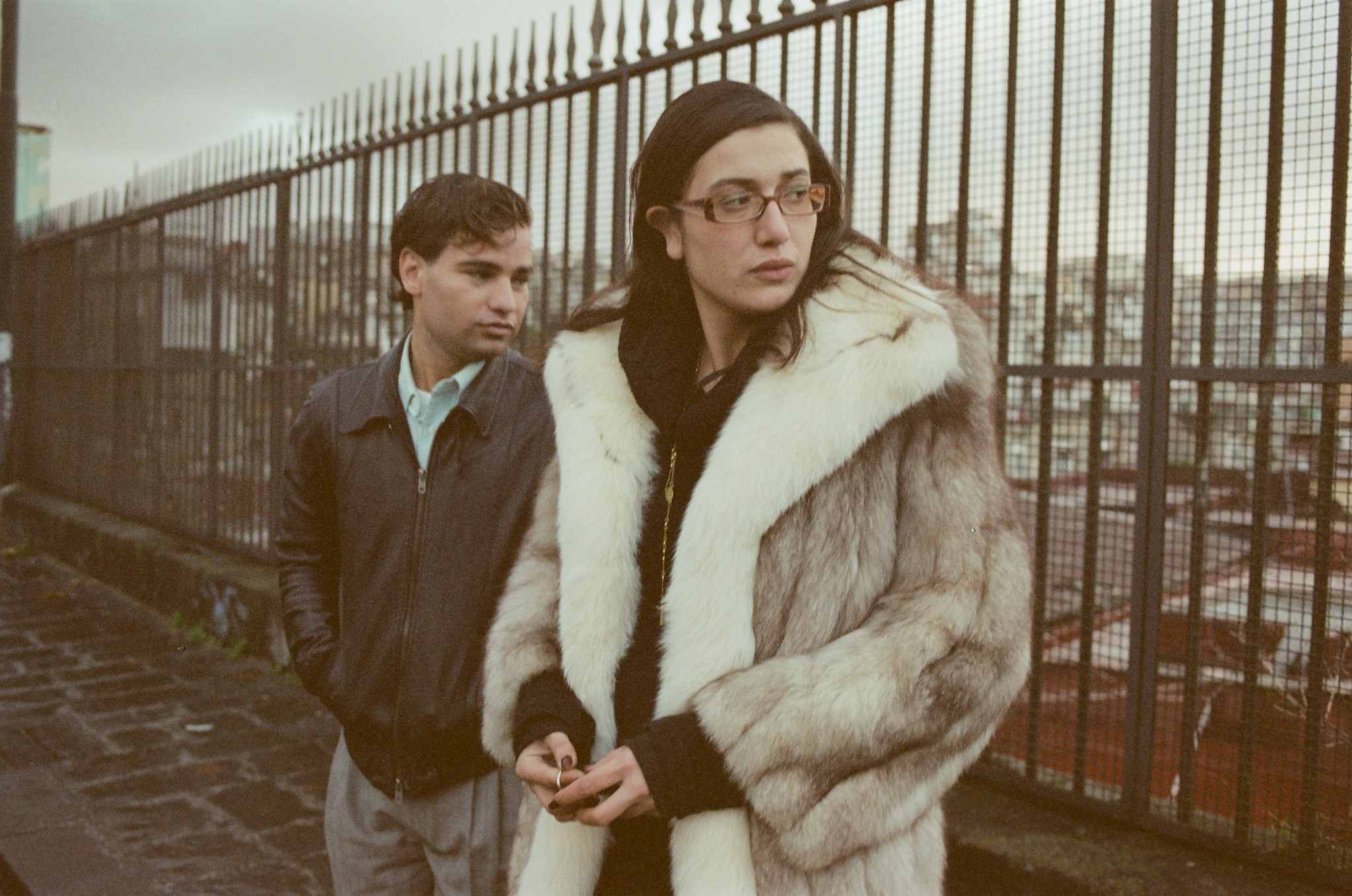
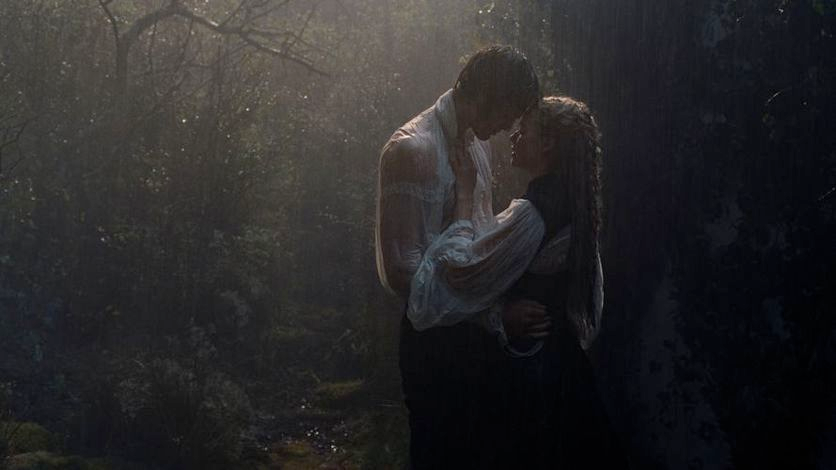
“Wuthering Heights” (2026) possesses a similar hyperreality. The tagline for the film is ‘the greatest love story of all time’, an approach compounded by its Valentine’s Day release date and focus on two co-leads (Jacob Elordi and Margot Robbie). Emerald Fennell confesses that the film is based on the interpretation of the book she had when she first read it at age fourteen. The adaptation has been described as ‘dark and beautiful and sexy and deeply, bruisingly romantic’. In short, the film is an adaptation of ‘Gothic Romances’ rather than Wuthering Heights specifically. I say this, because, to put it mildly, Wuthering Heights is not a sexy love story. It is barely a love story. Love and the romantic feature prominently, but so does childhood abuse, finances, family, and town gossip. To describe Emily’s novel as ‘sexy’ is especially strange. To quote Daphne De Maurier:
There is more savagery, more brutality, in the pages of Wuthering Heights than in any novel of the nineteenth century, and, for good measure, more beauty too, more poetry, and, what is more unusual, a complete lack of sexual emotion. ... Emily [...], striding over the Yorkshire moors with her dog, did not conjure from her imagination any cosy tale of happy lovers to console women readers sitting snugly within doors.
Q.D. Leavis similarly argues that Wuthering Heights is a savage deconstruction of Romantic tropes, placing emphasis on cycles of abuse and dependance. The extent to which analysis of Wuthering Heights is ‘correct’ is by-the-by – what matters more is its elevation into a hyperreal object.
Similar to Bridgerton, “Wuthering Heights” (2026) also features deliberately anachronistic soundtrack and costumes, along with its focus on the gothic romance at the centre. The filmmaking team are deliberately not adapting Wuthering Heights as written by Emily, but the simulated cultural idea of what Wuthering Heights means. This is shown by the addition of quotation marks around the title. Fennell explains that "I can't say I'm making Wuthering Heights. It's not possible. What I can say is that I'm making [...] a version that I remembered reading that isn't quite real.”. Here she acknowledges the distinction from the ‘real’.
One aspect of hyperreality has been skirted around thus far, but I would now like to address head on: Substituting signs of the real for the real results in a ‘murder of the real’. However, there is no such thing as a perfect crime, and this murder results in ‘vestiges of the real’ which hang around like browning at the bottom of the pan. As we live in a postmodern society, we exist on the plane of the spectacle not of reality, and therefore only glimpse reality through cracks in the simulated signs. As previously stated, this is not a uniform process, and different works and signs engage with hyperreality and the postmodern in different ways. Some hyperreal objects contain more flecks of blood of a murdered reality than other hyperreal objects. This is a particularly interesting process when we look at 19th century authors.
In hyperreal adaptations of works by female authors, the ‘murder of the real’ in question is the minds and lived reality of women. Jane lived a life, and filtered that life into her art. Her books are not ‘regency romances’ but descriptions of character and society as seen from a specific perspective. As they take on a simulated form they take on a hyperreal dimension, and Jane’s specific thoughts, perspective and eccentricities are veiled. Not that we ever can, but if we asked Jane what she was writing, she might say a Romantic novel (in the classical sense of the exhortation of feeling) but more likely she would say an etiquette guide. Sense and Sensibility is written as a ‘how to act’ guide (placing sense over sensibility) with love and marriage a reward for good moral behaviour. Regency Romances, by contrast, place supreme import on ‘following your heart’ and sexual compatibility. A woman who used most of her limited agency on this planet arguing for ‘marry a good man, and marry well’ being grotesqueisised into sexually repressed tight-corseted lip-biters eye banging each other across the debutante ball doesn’t quite sit right with me.
Similarly, Emily’s art represents her perspective and experiences. She chose the Yorkshire moors as she grew up there and always represented an escape into a wild and passionate past. She was reacting to industrialisation, and personal circumstances, and a thousand other things that neither us nor her could conceptualise. Using the Gothic in a real setting, emphasising escape rather than claustrophobia, was a radical act in the 1840s. To condense all that complexity into the idea of a ‘Gothic Romance’ seems reductive, with nobody quite as reduced as Emily.
This same process is not applied in quite the same fashion to male authors of a similar period. How come Wuthering Heights is a Gothic Romance but Great Expectations (1861) by Charles (Dickens) isn’t? The love story between Pip and Estella is as prominent, and arguably more romantic than Cathy and Heathcliff’s, and it features just as much anti-industrialisation and wild landscapes. Instead, Great Expectations is a ‘Dickensian Novel’ – a hyperrealised simulation in its own right, don’t get me wrong – but one that continues to centre the author as the original reality. The idea of somebody writing a Charles novel in the present day would be treated as strange. People create fiction heavily informed from the world and characters, of course, but there are no attempts to capture the same scope and style. By contrast, people are comfortable writing ‘Regency Romances’, despite the form being Jane’s work. Take Leo (Tolstoy). Anna Karenina (1878) features just as much romance, court society, betrayal and tragedy as novels by female authors, but it is considered just a ‘novel’. Not a Gothic Romance, or a Regency Romance, or some other category (Tsarist Romance?), but a Novel. And a Great Novel at that. While many have taken and reinterpreted Leo’s work (Woody Allen’s Love and Death (1975) comes to mind) and its existence as a hyperreal piece of culture is cemented and derealised, the continuing life and voice of the author remains. Works by male authors seem to be in an entirely different category to female authors. Their works can be reinterpreted and bastardised, but with less murderous intent than when culture gets its grips on works by female authors. For example, A Muppets Christmas Carol (1992), while simultaneously representing Charles’ ascension to a simulated object, also features Charles himself. Albeit played by Gonzo.
One reason for this is undeniably that Emily and Jane’s work has connected on a deeper level, allowing for a greater amount of reinterpretation. It is notable that the hyperreal visualisations of Jane and Emily’s work has both been created and consumed by women. Ironically, it is the deep love for the work that has hastened this veiling. This is not the ‘fault’ of any single artist, and is not a commentary on the quality of the work. Indeed, many modern artists are fully aware of the hyperreality of the subject matter and reference it – Fennell’s quotation marks around Wuthering Heights being the most obvious example. There is a question however on the value we place on the work of different authors. Jane and Emily’s books being placed into the category of ‘genre Romances’ rather than Great Works of Literature is a conscious choice by society writ large, and is what has partially caused these examples of such extreme hyperreality.
Arva, E.L., 2008. Writing the vanishing real: Hyperreality and magical realism. Journal of Narrative Theory, 38(1), pp.60-85.
Baudrillard, J., 1996. The perfect crime. Verso.
Baudrillard, J. 2009. The vanishing point of communication. In D. B. Clarke (Eds.), Jean Baudrillard: Fatal theories (pp. 15–23). Abingdon, UK: Routledge.
Baudrillard, J., 2020. Simulacra and simulations. In The new social theory reader (pp. 230-234). Routledge.
George, L.M., 2025. Regency Noir: Jane Austen’s Afterlives in Sanditon and Bridgerton. Romanticism on the Net #84
van Kessel, C. and Kline, K., 2019. “If you can’t tell, does it matter?” Westworld, the murder of the real, and 21st century schooling. Journal of Curriculum and Pedagogy, 16(2), pp.196-216.
Koolen, C., 2018. Reading beyond the female: The relationship between perception of author gender and literary quality (Doctoral dissertation, University of Amsterdam).
Leavis, Q.D., 1981. The Englishness of the English novel.
Looser, D., 1996. Jane Austen ‘Responds’ to the Men’s Movement. Persuasions: The Jane Austen Journal, 18, p.170.
De Maurier, D., 1971. Great Love Stories Romantic Humbug. The Buffalo News. 10 April 1971. p. 19.
Moussaoui, R., 2021. Gothic Reality: A Study of Emily Brontë’s Wuthering Heights. AWEJ for Translation & Literary Studies, 5.
Southward, D., 2018. The Metamodern Moment: Post-Postmodernism and its Effect on Contemporary, Gothic, and Metafictional Literatures (Doctoral dissertation, University of Sheffield).
Šporčič, A., 2022. A metamodernist utopia: The neo-romantic sense and sensibility of the Bridgerton series. Acta Universitatis Sapientiae, Film and Media Studies, (22), pp.122-138.
Ullah, Z., Ullah, A., Iqbal, H., Zahir, Z. and Zaman, A., 2020. Great Expectations: A Manifestation of Gothicism and Romanticism. International Journal of Trend in Scientific Research and Development (IJTSRD), 4(5).
Warwick, A., 2007. Victorian Gothic. In The Routledge Companion to Gothic (pp. 43-51). Routledge.