Ironic detachment is the central defense mechanism of my generation, and being perceived as “cringe” has become the ultimate social failure. At twenty-four, I recognize that Gen Z’s crippling self-consciousness is the direct result of our premature exposure to—and exposure on—the Internet: we’ve seen too much and shown too much. This has fundamentally severed my peers and I from generations whose coming of age preceded total digital saturation. Even millennials, who’ve also lived most of their lives online, cannot fully relate to the Gen Z experience—one in which my friends and I found ourselves talking to grown men in Omegle chatrooms and watching ISIS beheading videos before we had ever walked the halls of a high school.
We grew up alongside the Internet as it curdled into something increasingly absurd, frightening, and inescapable. To cope, we learned to create distance through irony: we listen to podcasts to make fun of them, we make music knowing it’s bad, and we convert major geopolitical events into memes minutes after they hit the news. Everything is camp to the point of it being absurd, and everything is a reference to the point of it being a commentary. Irony has so soaked our emotional vocabulary that it has become commonplace to talk about engaging with bad media “unironically.” My generation is also marked by its subversion of Judeo-Christian taboos surrounding sexuality, money, work, and gender norms. While these mores certainly persist, they have perhaps never been more criticized or held less overt power in American pop culture than they do today. Yet humans are endlessly inventive in finding new ways to police others back into self-consciousness: it seemed that in 2025, that policing took the form of an attack on sincerity.
I’ve noticed that the reflexive criticism among my age demographic is no longer to call something wrong, lame, or inauthentic, but to call it cringe. While cringe can be an accurate critique, it has expanded into a catchall dismissal of anyone who tries earnestly at anything. I’ll admit that I’ve internalized this: I cringe at myself every time I post a collage, poem, or essay on the Instagram account I run for my zine because it feels embarrassing to put my art out there knowing that I don’t have the eyes on my page to show people that it’s worth looking at. I can hate that I’ve been taught to filter everything I do through the lens of metrics and potential commodification, but that is the programming. Vulnerability is seen as bold when there’s an audience, but it can come across as desperate without much of one. Even though I believe in what I make, I sometimes feel tempted to hide from it by undermining my own sincerity. Rapper 2hollis captured this dynamic on The New York Times’ Popcast, observing that “everything is a meme, and ironic, and a joke… and it’s kind of degrading art because you can’t even do anything serious anymore without people going ‘he’s aura-farming,’ or ‘bro thought this was—’ whatever the fuck they type.” 2hollis diagnosed the problem, and Addison Rae embodies the resistance.
In the fall of 2022, I wrote a short essay for the first edition of an Internet zine called Delude Magazine about why I loved Addison Rae. We were instructed to make art about what it means to be a delusional girl, or to be a girl on the Internet. I described Addison as delusional in two ways, with the first being that she seemed to operate with a peculiar immunity to the crushing self-awareness and self-consciousness that so much of our generation developed after growing up online. Her numerous awkward public encounters, mini-scandals, and failed business ventures seemed to have no impact on her belief in her own ascent. She wasn’t embarrassed to try again, and she never addressed the outsized vitriol she received from the public. The second cite of her delusion was her childlike excitement about the prospect of becoming a star. I wrote:
“Addison welcomes fame with a radiant smile and a sense of wonder like that of Dorothy walking down the yellow brick road. A yellow brick road that leads to Hollywood, which has lost its shimmer and been exposed as a cesspool of sinister power plays in the past few years. It’s also the fact that Addison seems to maintain this starry-eyed awe despite this that makes her a delusional girl.”
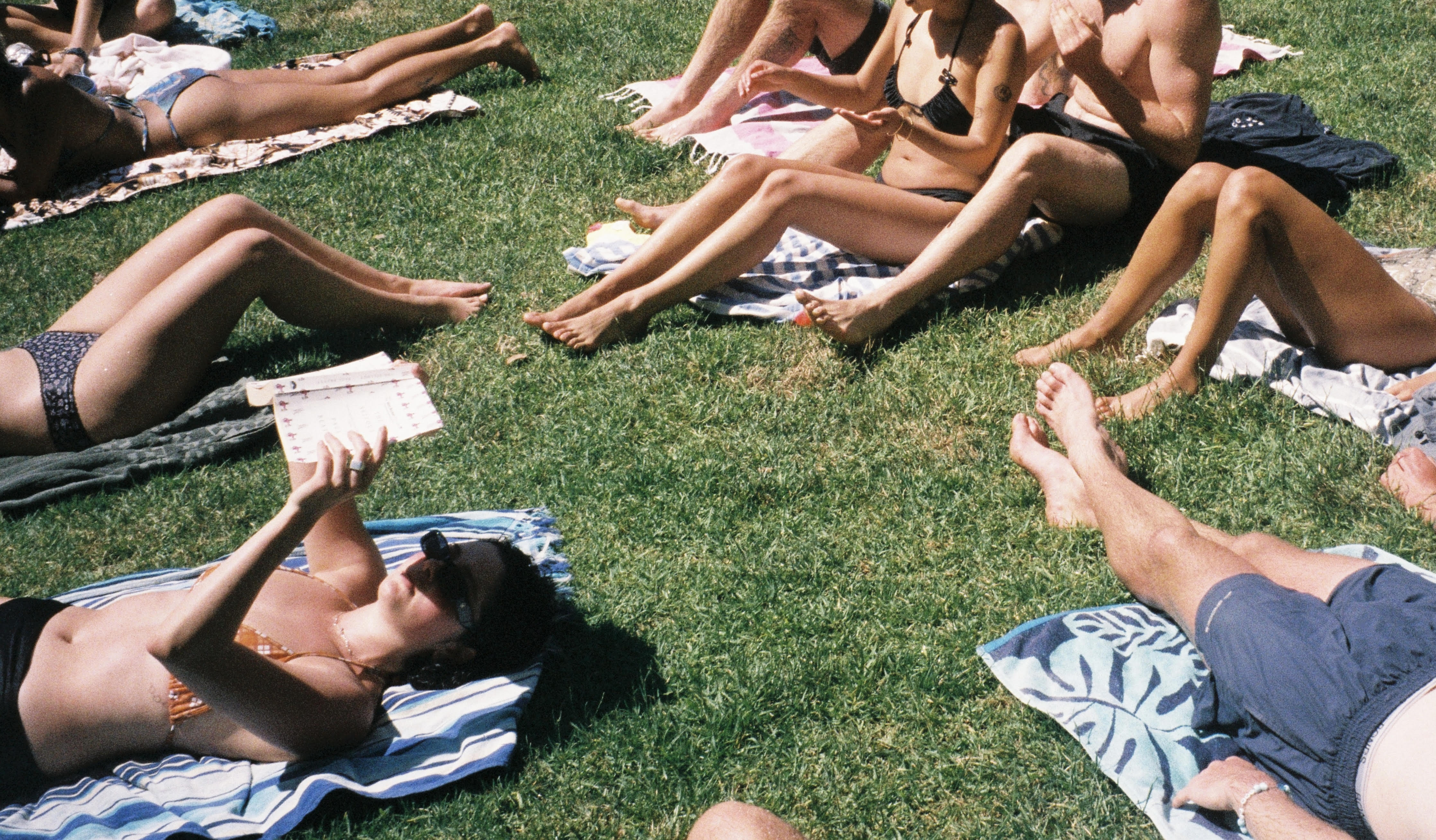
I took an interest in Addison during her days in the Hype House: I was charmed by her joie de vivre and glittering confidence on camera. I recall telling my friend that she had the energy of a girl perched on an inflatable flamingo at the waterpark. She seemed to be living in blissful bikini world all the time, and I think that bothered people. I sensed that it bothered people, and I liked it. There was a lightness to her spirit juxtaposed by an indulgence to her facial expressions, body movements, and sexuality that I found unique and magnetic. Unlike her peers, some of whom were arguably better dancers, she never broke character or stiffened with self-consciousness on camera; she seemed to be enjoying the opportunity to engage with an audience without a drop of nonchalance. It felt like she wanted to deliver a show, not just to be seen. That said, I could tell she was fine with the viewer knowing that she wanted to be looked at. It made me wonder if she’d been a competitive dancer growing up; she had the ferocious twinkle in her eyes of a Southern showgirl.
The moment I believed in Addison’s star power came after a widely mocked video surfaced in which she continued filming a TikTok on the street while fans waited awkwardly behind her for a photo. This move was framed as ungracious and tone-deaf, but I found it funny, honest, and revelatory of that carnivorous showgirl drive for the spotlight that I had always suspected in her. She wasn’t rude about it, but she let them wait. This simple gesture illustrated Addison’s self-trust; she didn’t panic to people-please or scramble to manage optics. She finished what she was doing, exhibiting a willingness to be misunderstood in service of her own momentum that her peers did not have. During her awkward transition between Internet sensation to wannabe starlet, people painted a gloss of cluelessness over her actions. She must not have understood how desperate it looked to post seven to eight TikToks per day, or to slap her name on any random mall product that would take it, or to participate in the decidedly low-brow Hype House. As a walking representation of what was mainstream to younger teens in the early 2020’s, she was dismissed as vapid, tasteless, and just plain annoying. But I sensed that Addison was savvier about marketing than she was letting on; she could see that the path to lasting fame had always been exposure first, refinement second. Especially in the age of algorithm-as-gatekeeper, she knew she needed the clicks before she could get in the rooms with the men in suits.
Addison later addressed what she described as the “ridiculous” quantity of TikToks she posted in her early career in her episode of Popcast in May 2025. She discussed how reflecting back on her Hype House days brought her to the conclusion that choice and taste are luxuries: “…when I was starting this on TikTok and I was posting these things, it was a lot about, ‘how am I gonna get out of here?’ Like, it wasn’t even about, like, let me show the intricacies of myself right now. I didn’t feel like I needed to do that yet…I was like, I’m gonna make it out of here first.”
That kind of trust in the process and in oneself—especially in a woman, especially in public—reads as arrogance to people who have learned to contort themselves around perception. Yet what distinguishes a true star from a performer is that stalwart belief in one’s own upward trajectory, unburdened by anxiety over whether it is authentic or deserved. There is an extremely fine line between delusion and the power of positive thinking, and the Hollywood Walk of Fame stretches across it. I sensed that Addison understood this, and it was clear that she had the nerve to drag herself across that line regardless of how cringeworthy people seemed to find it. In the end, no one else from her TikTok milieu did. I recently told a friend that no one is above delusion, so you might as well use it to your advantage. Most of us are propelled by a tangle of deeply held negative beliefs about ourselves that exist in uneasy contrast with an inflated sense of our own importance. From this paradox emerges self-consciousness, or the persistent feeling that everyone is watching. Since none of us escape this contradiction, the only logical response is to become delusionally positive about what we are doing and what we are capable of. If you read Addison’s lyrics, this seems to be her whole mentality.
Another quality of Addison’s that made her cringe is that she has always been thrilled to be there. Perhaps her Southern gentility doesn’t allow for ironic detachment from blessings, or perhaps enthusiasm is just a cornerstone of her personality. She lacks the self-imposed distance from her hunger for fame and accomplishments that so many celebrities disguise as humility. This was another reason that I rooted for her; I have always disliked when celebrities make statements pretending to be above it all, and just about the craft. It feels ungrateful and insulting to the audience’s intelligence. It feels like it’s about seeming cool. No one lands an agent without trying, no one reaches fame without a strategy, and no one attends award shows because they were held at gunpoint. For every gesture of nonchalance that a celebrity makes to convey relatability, there are millions of people watching who would give it all to be in their position. I respect celebrities who simply avoid the press as much as possible because the exposure makes them uncomfortable. I can’t stand the ones who pretend that they never wanted the attention.
Sometimes the secondhand embarrassment elicited by something that is over-the-top, socially inept, or garishly inauthentic is warranted. Some things, like watching pop stars pander clumsily to the wrong audience, are genuinely cringe. However, no matter how badly an emerging artist bungles their first few attempts to make something cool, I believe that the confidence it takes to continue can eclipse their perceived failure to meet social or artistic expectations at the beginning. If they keep an open mind and establish a genuine vision, they will learn from their mistakes and get better. Pop culture has reached an interesting paradox in 2026. Audiences are simultaneously more media-literate and culturally aware than ever; we want our pop starts to deliver us politically conscious work and pay lip service to our social causes in a way that doesn’t feel performative. At the same time, we have also never been more immersed in or receptive to mindless, overproduced content that one could argue lowers the bar for good art. We have never been so intellectual and anti-intellectual. Two of the biggest words of 2025 were “slop” and “brainrot.” Not only is this puzzle impossible to solve, but the criticism is impossible to escape because it lives on our phones. Unlike the days where the paparazzi were the primary gatekeepers of celebrity activity, there is no longer any ducking away from the flashing lights to avoid scrutiny. With all these newfound complications of life in the spotlight, the social taboo of being cringe is scaring people away from the necessary work of failing before starting to get it right.
Addison received a remarkable amount of hate throughout the first few years of her career, and most of the criticism seemed to circle the word “cringe.” When she emerged in 2020, I found myself feeling protective of this seemingly harmless LSU dropout whose very existence seemed to evoke war flashbacks in onlookers still processing high school. I posited that she was a victim of what I call “Kill the Cheerleader Syndrome,” or the nefariousness that women sometimes project onto conventionally attractive and charismatic other women because they remind them of the popular girls at their high school. Sometimes those adolescent feelings of comparative inadequacy linger for decades and calcify into true misogyny. I feel that it is fundamentally rooted in slut-shaming: jealous women look at Addison types as sexually threatening but essentially inferior because of their pedestrian taste and universal appeal to men. They make up the class of “other girls” against whom millions of women construct identities.
Even today, it’s easy to find critiques of Addison and her work as simpleminded and hollow. The world she builds of pink pumps and nail polish by the swimming pool is not serious enough to stand by itself: it has to be saying something about something else. It seems that these particular critics will not be satisfied with Addison until she writes a think piece about the symbolism of pink bras in her music videos while living in Trump’s America. Or until she ups the ante of her imagery and self-styling to the extent that it becomes camp. Camp is acceptable because it pokes fun at our vapid and materialistic culture rather than simply reflecting it back to us. But like reflexively resorting to irony, compulsively intellectualizing or satirizing art is just another way of creating distance from it. While there is a growing recognition of the value of pop music, much of modern art criticism still tells us to dismiss what is not politically charged and intellectual as useless. But Addison doesn’t need to write Substack essays about the complexity of patriarchy to represent forces larger than herself. She represents nature, instinct, sensuality, feminine chaos, and freedom. She represents being rather than thinking. In her Rolling Stone cover story, Addison remarked that, “whenever I look at something or hear music or watch a movie, I’m always thinking ‘how am I feeling watching this or looking at this? And how can I make someone else feel that way whenever they look at what I make?” (Spanos, 2025). It’s an almost Eastern understanding of consciousness as inner knowing rather than external confirmation.
There is a component of pop spirituality to Addison’s music and persona that culture needs right now. A look past the pictures her doing yoga poses on the beach and sitting in sound baths will reveal how the theme of mindfulness persists throughout her lyrics and public statements. She writes about accepting pain, embracing uncertainty, and surrendering to the moment. Biz Sherbet of the Nymphet Alumni podcast described her music as “manifestation pop,” in that the language used in her lyrics “is nearly identical to the gospel of manifestation and affirmation that’s taken hold of pop culture under the directive of Gen Z and millennials” (Sherbet, 2025). Emma Baker of STAGIRL podcast has been pointing out the ways in which Addison embodies embodiment since first covering her on the show in 2022; she recently quoted a listener who compared watching Addison dance to watching girls play mermaids. I first saw it in Addison’s lack of self-consciousness on TikTok, and I saw the realized version of this quality when I went to Addison’s concert in October 2025. I can only describe her as being so there: an open, sensual, generous performer relishing in the joy of entertainment. It made me emotional to watch her move through her setlist with the excitement of a little girl who finally got her solo in the talent show. She reminded me of a passage from the influential therapist Carl Rogers’ On Becoming a Person, in which he describes a byproduct of self-actualization as “the quiet joy in being one’s self…a spontaneous, relaxed enjoyment, a primitive joie de vivre” (1961). Addison’s joy was almost radical, and I could see why it made people squirm with discomfort and jealousy before dismissing it as cringe.
Modern society runs on the values of what spiritual teacher Eckhart Tolle calls in The Power of Now “compulsive doing” (2004): constant productivity, optimization, and performance. The inescapable presence of measurement—follower counts, cortisol levels, apps tracking the number of pages you read that day—is the reason that I feel embarrassed to post poems that get five likes on my Instagram. It’s the reason that relaxation now renders a sense of guilt for what we could have been doing to make our lives better in a quantifiable way. As much as I know that I love my work, I’m just as susceptible to that messaging as everyone else. While Addison would be the first to admit that she has always been chasing fame, it doesn’t seem to come from a mentality of lack; I don’t get the sense that she is filling a void but rather bursting with glitter and in need of a place to put it. In 2025, Addison acted alongside Dan Levy in the upcoming movie Animal Friends, and he remarked on how “the amazing thing about Addison is that where most people’s ego is, she just has creativity and curiosity. That is such a rare quality in a person, especially somebody with her social media standing.” One of Addison’s producers shared that, “with Addison, it can come down to a rock she saw. She’ll bring up a specific tree and say, ‘This is what “Diet Pepsi” [the song she was writing at the time] feels like.’ And if Addison Rae says that tree is ‘Diet Pepsi,’ that tree is ‘Diet Pepsi’” (Spanos, 2025).
I have Addison to thank for inspiring me to start my own zine, as embarrassing as promoting it still is at times. I’d been making collages and writing here and there for two years, and I was finally beginning to accept that it isn’t inherently cringey to want to be recognized. However, my lack of technical knowledge about either medium gave me pause. I’d never taken a writing class in my life, and I didn’t want to release my innermost thoughts into the ether without knowing that I could stitch them together beautifully. But there truly is no way to know, and the people who insist on knowing take a lot longer to produce art. Art loses the sparkle of spontaneity when it sits in the kiln for too long. All you can do is put in the work, trust your instincts, and decide that what you create will be good. Or maybe it’ll be bad, but you still made something. When asked about her artistic process for her self-titled debut album, Addison gave a refreshingly unpolished answer that said it all: “I just mood-boarded my vibes. I literally had no music to play him at that point, so it was about trust. Like, ‘Yes, I’m in the clouds, and I enjoy being there.’” It’s a silly quote, but it was evocative of how Addison always says ‘yes’ to her vision, to her intuition, to life itself. Her entire project dismisses the specter of being cringe and embraces existentialism. She understands that you have to put on the sparkly pumps, start the podcast, and tell everyone about it. Otherwise, what really is the point?
Popcast (2026). Addison Rae Interview: From $20 TikToks to Grammy Nominee. [online] Youtube. Available at: https://youtu.be/I35Etkaak30?si=6QPttSkTzin7n6DB [Accessed 5 May 2026].
Rogers, C. (1961). On Becoming a Person: a therapist’s View of Psychotherapy. 1st ed. London: Constable.
Sherbert, B. (2025). Pop’s Prosperity Gospel: How Addison Rae Ushered in a New Spiritual Style. [online] AnOther. Available at: https://www.anothermag.com/fashion-beauty/16521/addison-rae-spiritual-style-affirmations-biz-sherbert [Accessed 9 Mar. 2026].
Spanos, B. (2025). Addison Rae Goes Deep on TikTok Stardom, Her Debut Album, and More. [online] Rolling Stone. Available at: https://www.rollingstone.com/music/music-features/addison-rae-tiktok-debut-album-1235231878/.
Glenn Baker, E. (2022). Ep 02: Addison Rae. [online] Apple Podcasts. Available at: https://podcasts.apple.com/us/podcast/ep-02-addison-rae/id1622032097?i=1000560530045 [Accessed 5 May 2026].
Tolle, E. (2004). The power of NOW : a guide to spiritual enlightenment. First Trade Paper ed. Vancouver, B.C.: Namaste Pub. ; Novato, Calif.
Popcast (2026a). 2hollis + His Drummer Dad Open up in Joint Interview. [online] Youtube. Available at: https://youtu.be/bqIPbq6kQ9k?si=ZNXlXVLvbS359LWM [Accessed 5 May 2026].