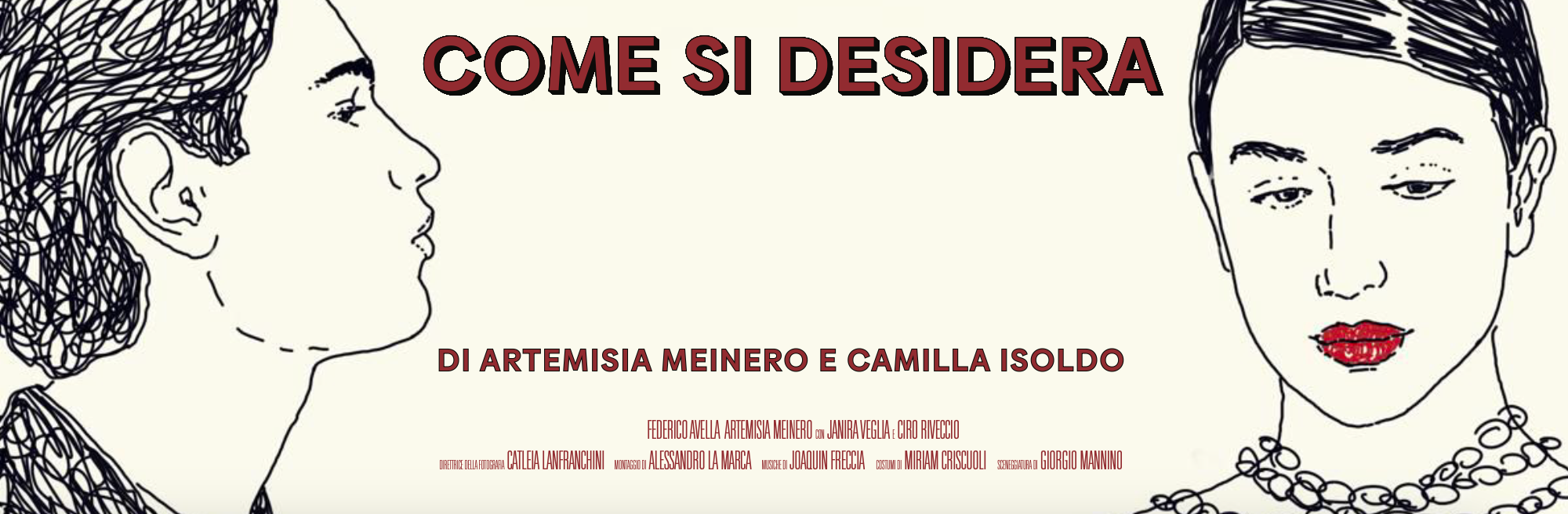
“The pettiness of the masks we are bound to wear for the rest of our lives” - Come Si Desidera
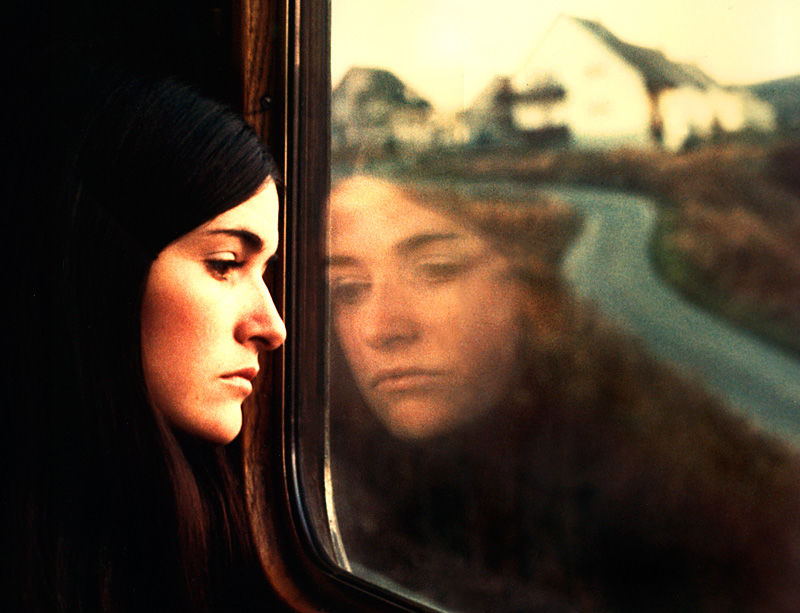
In Come Si Desidera, identities are rarely still. Faces observe themselves through mirrors and eyes track the movements of others. Characters watch one another with the intensity of people longing to understand each other. Desire in this short film is never simple attraction, it is imitation, projection, and performance. Come Si Desidera portrays the particular ardour of youthful love, the slow erosion of the self through intimacy, until another person’s gestures begin to overwrite your own. Set against the faded romanticism of Naples, the short film moves like a memory half recalled, intimate and constantly slipping out of reach. The film marks the directorial debut of Artemisia Meinero and Camilla Isoldo in their first collaborative short. Inspired by a story from a Neapolitan writer of the 1950s, the pair approach Come Si Desidera less as conventional storytelling than as the construction of an emotional atmosphere. Rather than treating identity as something fixed or innate, Come Si Desidera presents it as something assembled through longing. The film understands youth as a state of perpetual becoming, an age defined by imitation, desire, and the uneasy suspicion that there may be no authentic self beneath the performance. When I spoke to the directors Artemisia and Camilla about the emotional core of the film, they described youth as something inherently contradictory: “This love is sweet, as well as sour. As life is, as youth is.” That tension runs through every frame of the film. Love in Come Si Desidera is never stabilising, it reshapes and distorts. To love someone becomes, inevitably, to risk dissolving into them.
The film opens with Raffaele (Frederico Avella), on a motorbike, cigarette in hand, drifting with the reckless abandon of youth. This sense of movement continues throughout the film, particularly in his pursuit of Mira (Artemisia Meinero), a beautiful figure who constantly slips further out of reach the closer he gets to her. When watching the film, I became completely enraptured by Mira. She is an atmosphere; elusive, and impossible to fully possess or understand. Drifting through the film in Miriam Criscuoli’s decadent costuming, black dresses, pearls, and soft silhouettes that seem suspended somewhere between glamour and melancholy, Mira moves with the instability of a dream threatening to disappear upon waking.
In one of the film’s most intimate moments, Mira and Raffaele stand face to face, his fingers tracing her features just as she does his. The scene unfolds almost entirely through breath and soft whispers, until the boundary between affection and imitation begins to collapse. It is almost uncomfortably intimate, as though the audience has entered into something they were never meant to witness. The filmmakers explain: “We build our identity since we are kids, by mirroring others. This is why we decided to highlight mirrors and reflections, copying and mimicking are our way through life.” Throughout the film, reflections become less decorative than psychological, mirrors function simultaneously as distortion and Mira becomes not merely a love object for Raffaele, but an imagined self, “his dream, his purpose.”
The film’s fascination with fractured identity extends into its visual grammar. Drawing from backgrounds in modelling and photography, Meinero and Isoldo approach cinema with an acute awareness of composition and stillness. Every frame feels meticulously arranged, balancing scenes of intimacy with geometric precision. Bodies move through shadows or linger in doorways, what matters most in the film is rarely spoken outright, it lingers instead in gesture, silence and light. Isoldo states: “What is on screen is not only the pure image but also what it feels for us,” promising an experience in which cinema becomes as much emotional atmosphere as visual representation.
Speaking to me about the film’s visual influences, Isoldo cites Davide Sorrenti as a major inspiration, particularly “the colours he used” and the emotional atmosphere of his photography. Like Sorrenti’s work, Come Si Desidera captures loneliness and the unfurling of youth. Intimate, close-up shots of faces, dim interiors, cigarette smoke curling through darkness evokes the same melancholic reminiscence of Sorrenti’s earlier photography. This sense of youth as something both vivid and fading portrays identity as something constantly changing and slipping out of reach. The filmmakers themselves frame this restlessness as central to the film’s emotional structure: “We chase everything that is put in front of us to achieve something that is undefined, and end up running in a loop of dissatisfaction and longing.”

The directors also reference Edward Hopper, particularly his use of light to intensify emotional isolation. This influence can be seen in the film’s carefully controlled illumination, interiors pierced by candlelight, yellow streetlamps spilling onto the street, or the brief flare of a cigarette, moments where light carves characters out of darkness without fully revealing them. These visuals in Come Si Desidera creates a world in which perception is always unstable.
The rhythm of the film resists the contemporary demand for immediacy, allowing emotion to gather and build rather than announcing itself outright. Silence stretches between characters. Scenes of physical closeness are allowed time to breathe. In an era shaped by accelerated viewing habits and fragmented attention spans, the film’s slowness feels incredibly refreshing. Within this film, silence is never empty but deeply expressive, suggesting that intimacy often exists most powerfully beyond speech. The film trusts this emotional uncertainty, as Meinero and Isoldo describe, “Once it’s felt, it’s going to sink in and leave something.”
This atmosphere is deepened further through Joaquin Freccia’s score which moves through the film like a memory half recalled: nostalgic and slightly haunted. The music drifts delicately beneath the scenes, amplifying the film’s sense of longing and melancholy. At times, it becomes difficult to tell whether the melancholy comes from the score itself or from the images it leaves behind. This dimensionality is precisely what makes the film feel so immersive; sound, silence and image begin to blur into one another until the film itself feels less like narrative and more like recollection, something intimate and nostalgic.
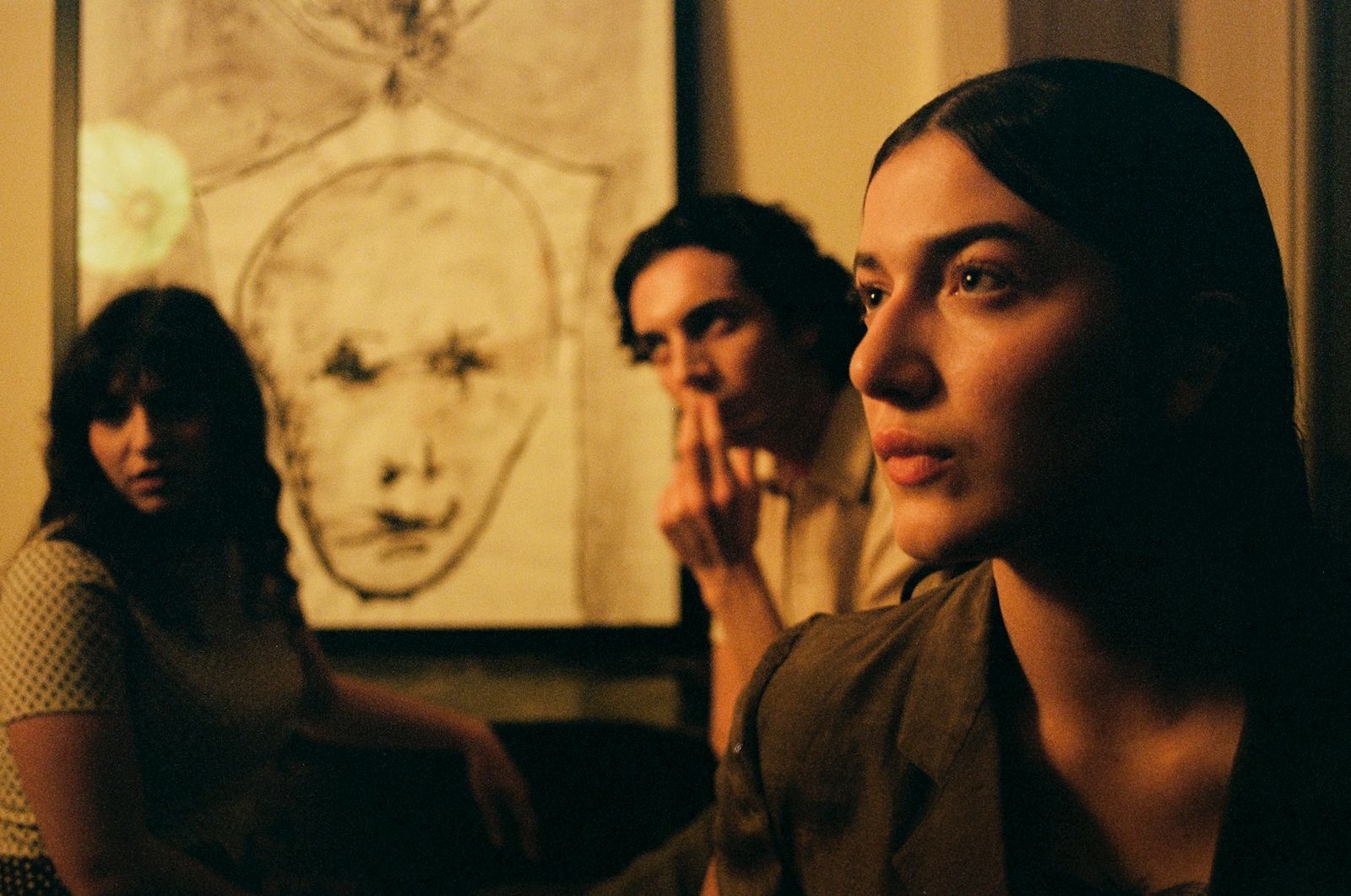
I noticed that the characters in Come Si Desidera feel caught somewhere between presence and absence, chasing moments that disappear almost as soon as they arrive. The film refuses the comfort of resolution, or perhaps even the possibility of it. Instead, it lingers in anticipation, and in the ache of wanting something that may never fully materialise. When I asked the directors what emotional experience they wanted audiences to leave with, Artemisia Meinero described “a moment that still has to come. Times that can’t or won’t meet, but we dream of them restlessly. You know that it can’t be.” Camilla Isoldo puts the feeling more simply: “a beautiful melancholy.”
Nothing in Come Si Desidera is ever completely resolved or fully explained. Emotions remain unfinished, and you find yourself drawn into the same restless pursuit as Raffaele, constantly trying to understand and hold onto Mira before she slips away again. The directors explained that “doubt was the only way this story could be ended,” and that uncertainty becomes one of the film’s greatest strengths. Mira remains elusive, suspended at the edge of understanding, like an enigma that the film refuses to fully unravel. Rather than forcing meaning onto the audience, the film leaves space for viewers to sit with their own interpretations. This tension is even present within the title itself. Come Si Desidera (As you Wish), at first sounds romantic, almost tender, but gradually the phrase reflects “the character bending, compromising because of a need, a desire.” Over the course of the film, “As You Wish” becomes less an expression of devotion and more a surrender of selfhood. Desire reshapes their identity until the line between loving someone and becoming them begins to disappear altogether.
Like the mosaic floor where Mira and Raffaele meet, Come Si Desidera understands identity as something inherently fragmented, beautiful precisely because it never settles into a single, stable image. By the end of the film, what lingers is the sense of having briefly touched something beautiful, before watching it disappear again. It is this transience, the film’s refusal to fully resolve longing or uncertainty, that makes it feel so affecting.
Come Si Desidera is a film for the dreamers, for those who are always reaching for something just out of grasp and never quite learn how to stop wanting it. For those who understand that longing can be its own kind of home, and that there is meaning not only in what we hold onto, but also in what slips away.
Come Si Desidera. 2026. [Short Film]
Directed by Artemisia Meinero e Camilla Isoldo @mnrrtms @camillaisoldo_
With Federico Avella, Ciro Rivieccio, Janira Veglia, Angelo Picone e Artemisia Meinero@feberico @jani.veglia @ciriveccio @capitanpulcinella @mnrrtmsDistributed By Kinero Films @kinerofilmsPress curated by Oddish Facts @oddish.facts
Contributed by R.A.S.I. @rasi.official
Come Si Desidera. 2026. [Short Film]. Artemisia Meinero and Camilla Isoldo. dir.
Meinero, A and Isoldo, C. (2026). Interview with Eilean Lough. Email Interview, 13 May.
Image: Come Si Desidera (2026) Backstage by Fabio di Fenza