

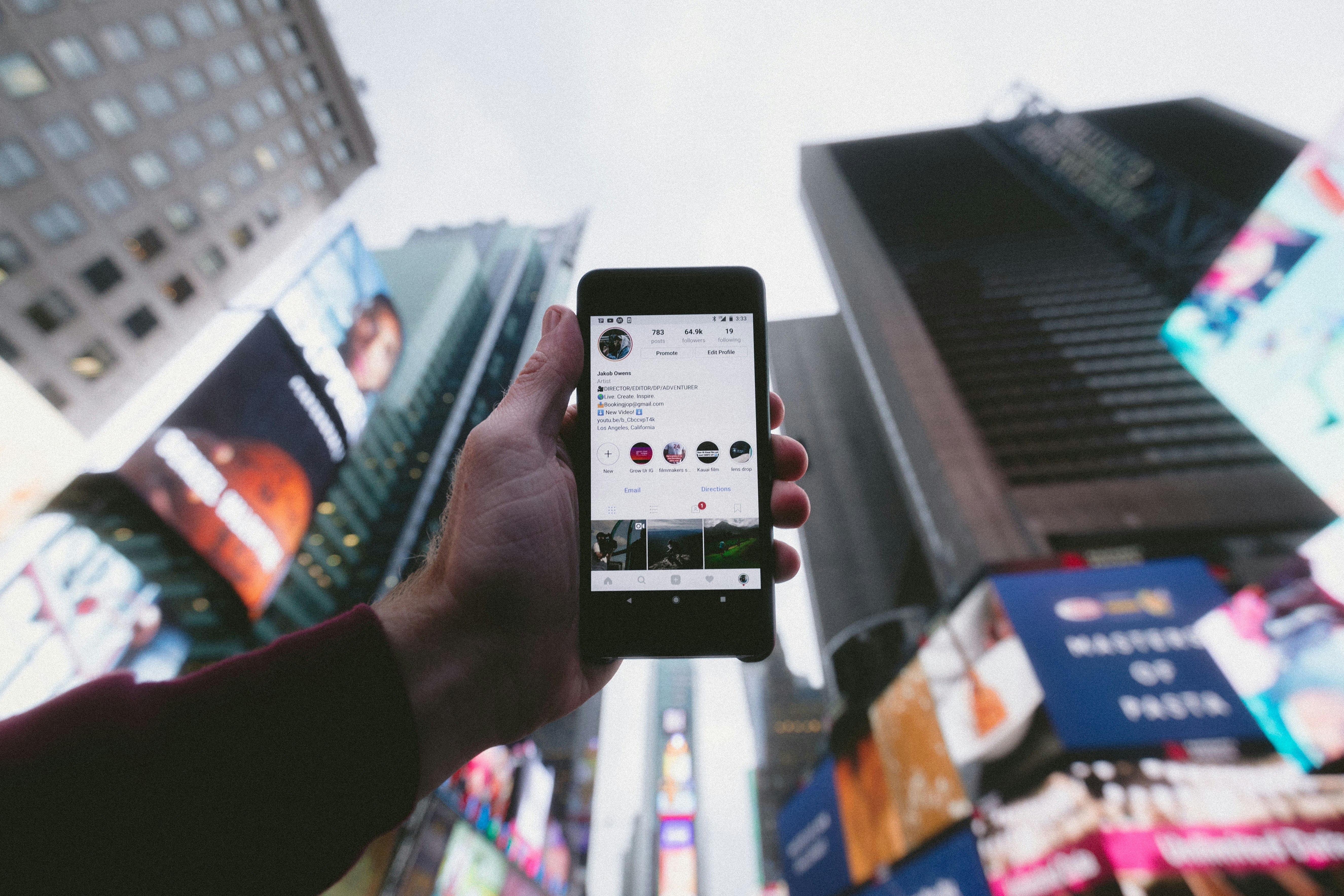
We live suspended between two opposing ideals: the desire to belong to something larger than ourselves, and the wish to remain singular within it. To be seen, recognised, and uniquely exceptional.
You were never supposed to know this many people. Not intimately, of course. Yet, you were never meant to be aware of this many lives: this many pathways, aesthetics, lifestyles, narratives. At any given moment a small, glowing rectangle can show you how thousands of strangers eat, exercise, decorate their homes, spend their money, and narrate themselves to the world.
Return for a moment to the playground. There were perhaps thirty other children there. They lived within a small radius. Their parents knew one another. Most had lived vaguely similar lives. Some small deviations, a few decisive turns, but the general arc was familiar enough. Settle down and start a family; grow roots deep enough that their children would eventually end up on the same metallic, gritty playground. This may sound disappointing when held against the meritocratic story many of us were raised on: that we could become anything, do anything, so long as we wanted it badly enough. Yet sociologically, a certain degree of sameness makes sense. Stability emerges when communities share values, expectations, and rhythms. Connection strengthens over time and solidifies with age. To borrow loosely from the sociological tradition of Durkheim, social cohesion depends less on individual brilliance than on collective alignment.
Religion once functioned, in part, as this kind of social glue. Everyone sang from roughly the same hymn sheet. Today, the hymn sheet has multiplied.
Where we once learned about the world from our immediate surroundings, we are now confronted with a vast and disorienting catalogue of perspectives. Every ideology, identity, aesthetic, and lifestyle arrives for us to sift through. A murky undergrowth of possibilities, of could-be and should-be. Each insists, in its own way, on being the right answer to the question of how to live.
The construction of a stable self feels fragile. The ground shifts constantly. Identity becomes a project of continuous revision and presentation. Perhaps this helps explain a paradox of contemporary life: despite unprecedented connectivity, many people report feeling increasingly isolated. We hear endless voices but genuine recognition - being seen in every complicated sense of the word - remains elusive.
Everyone has an output. Very little is absorbed.
In theory, the digital sphere offers a radical expansion of individuality. Never before have so many people possessed platforms for self-expression. However, the sheer scale of participation produces its own gravitational pull towards sameness. Among endless attempts to distinguish oneself, patterns begin to emerge. Differences, repeated often enough, start to look the same; among endless attempts to distinguish oneself, how many are truly different? Suppression of individuality is not a new political strategy. Historically, it has been imposed from above: through censorship, coercion, or cultural standardisation. What is striking now is how often the pressure toward conformity arises laterally, from within the crowd itself.
The berry is bright, so we eat it.
The pressure to conform operates subtly at first: a repost here, a small adjustment of tone there. Psychologists might describe this as normative social influence: the quiet calibration of behaviour in response to perceived group expectations. Over time, the performance solidifies. Beliefs begin to align with the norms we once only imitated. Conformity no longer requires force; it can emerge through continuous social calibration and informational influence.
From within our sardine can, identity is rarely built from the ground up. We are offered ready-made identities, stamped for authenticity by our largest institutions. Ideological positions and lifestyle scripts, each accompanied by its own community of recognition. One need not endure the uncertainty of not knowing who to be, nor the slower, more difficult work of figuring it out. Immediate consumption and fast results are the norm.
For those with power, such arrangements are convenient. A population organised into predictable desires is easier to influence, monetise, and mobilise. The marketplace becomes a subtle architect of identity, shaping values through algorithms, incentives, and trends. “You are what you consume” begins to feel less metaphorical when it is structurally enforced.
When worth is repeatedly framed in terms of visible success - appearance, productivity, possessions - alternative measures become harder to imagine. Personalities compress into recognisable archetypes: the lifestyle, the career identity, the curated aesthetic. Something quietly erodes in the process.
These traits we strive to parade can only ever be surface level. The most meaningful aspects of a person - stubbornness, kindness, a particular love for the sea - rarely translate cleanly into the language of platforms. These traits emerge through shared time: in awkward conversations, silences, small misunderstandings, and their repair. They are shaped through friction, through moments that resist easy interpretation or control, that demand something of us.
We rehearse our outputs, polish them, and release them into the stream: in Goffman’s sense, a carefully managed presentation designed for a watching audience. A projection, assembled for clarity and immediate recognition, but stripped of the density that makes it real.
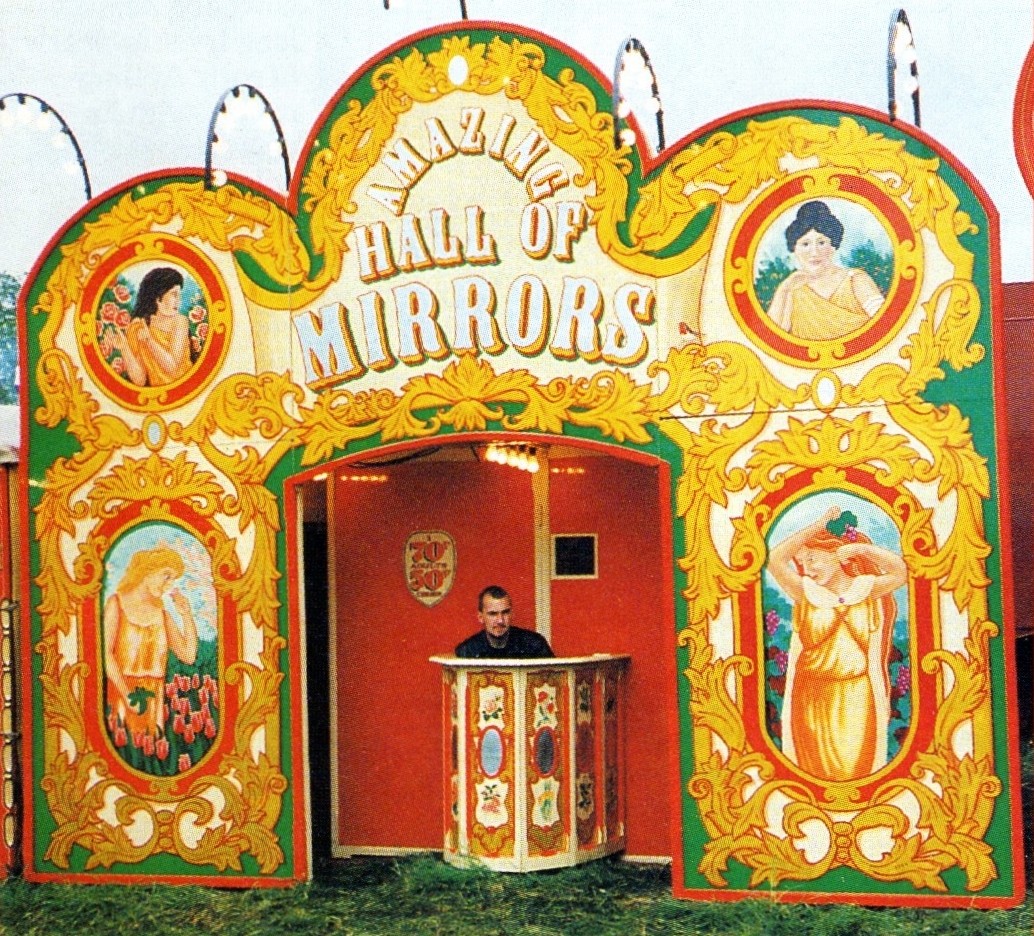
This form of connection offers a certain comfort. Interaction is controlled, legible, and easily affirmed, free from the hesitations and negotiations that define physical presence. It can feel like stepping into a soft room bouncing echoes from its turgid walls, ever affirming. The longer one stays, the more comfortable they get. Face-to-face conversation becomes awkward. Silence grows uncomfortable. It activates the same instinct as hiding beneath a large oak dining table during a family argument - a retreat from unpredictability, from the risk of saying the wrong thing.
Yet something is lost in the exchange. Without the small improvisations of real life - the unpredictability of tone, gesture, and contradiction - relationships flatten into performances that can be maintained but rarely deepened. Over time, the skills required for real connection - patience, attentiveness, tolerance for ambiguity - become alien. It can lead us to sacrifice genuine relationships for easily farmed validation and instant gratification. You may eventually turn around and notice the room has emptied.
Meanwhile, the catalogue of identities continues to expand. Morning routines, productivity rituals, lifestyle templates promising happiness through precise behavioural formulas. Each offers belonging, but always conditionally.
And yet the original question remains unresolved. How does one choose who to be when the available models multiply endlessly? When each promises community, but risks dissolving the self that entered it?
We began with a tension: the desire to belong and the desire to remain distinct. The digital environment intensifies both impulses simultaneously. It invites constant self-display while quietly nudging us toward recognisable forms.
From a distance, this can look like freedom. Up close, many of the options feel curiously similar. Two-dimensional, even porous, ready to collapse under their own weight. Perhaps belonging was never meant to require such careful engineering. To belong may not mean dissolving into the current that surrounds us, but remaining solid within it: shaped by others, yet still recognisably our own.
Durkheim, É. (1912). The Elementary Forms of Religious Life. London: Allen & Unwin.
Goffman, E. (1959). The Presentation of Self in Everyday Life. Garden City, NY: Doubleday.
Cialdini, R.B. (2001). Influence: Science and Practice. 4th ed. Boston: Allyn & Bacon.
Boyd, D. (2014). It’s Complicated: The Social Lives of Networked Teens. New Haven: Yale
University Press.
%20(1).jpeg)