

The hysteric unties familiar bonds, introduces disorder into the well-regulated unfolding of everyday life, gives rise to magic in ostensible reason…This feminine role, the role of sorceress, of hysteric, is ambiguous, antiestablishment…because the symptoms—the attacks—revolt and shake up the public, the group, the men, the others to whom they are exhibited.
(Cixous and Clement, 1986, p. 5)
Separation…makes me have to fill that separation with nothing, makes me grab at everyone, makes me hate everyone for me every single thing is equal to every other single thing. I have to
get to you. I have to get to you. (Acker, 2002, p. 180)
“Do you think I’m pretty?”
Such is the tidy existential bombshell posed by Miss Piggy to comedienne Joan Rivers, her co-star in a brief but memorable scene at the heart of the 1984 live-action puppet-starring melodrama The Muppets Take Manhattan. On its surface, the question summarizes paragons of gender power relations, beauty standards, and the convulsive precarity and insecurity of the late twentieth century’s cultural economy. It asks after a criteria of perceptual aesthetics and the authority with which it is adjudicated. The contexts for this particular instance of inquiry enlivens uneasy historical conditions: as a confidence between women, it seeks to map a use of the (homo)erotic in the practices of desire; within the setting of a department store, it asks after the commodifications of identity, agency, and the purchasing power necessary to access them under advanced stage capitalism; asked by a pig to a human, a eugenics-inflected post-human anthropocene is signalled; “asked” by a puppet, the ethics of Bruno Latour’s theories of agential objects is heralded by a bit of prescient 1980s vaudeville. In step with second wave feminist debate over the conditions of womanhood as well as an art critical examination of the ‘return of the figure’ in 1980s painting, led by the primal, abstracted, and deranged figurative abstractions of Jean Michel Basquiat, Julian Schnabel, and Elizabeth Murray, Miss Piggy seeks to understand her place vis-a-vis the aesthetic dimensions of the self—the primary unit of currency available to femme bodies in the realities of heterosexist patriarchal society.
But there is too a phantom within the scope of the query, in the bulging, impassive stare of its puppet querent: in advance of an aesthetic discourse outright is an almost Brechtian girl-on-girl psychoanalysis that overdetermines the scene of action that follows: do you think? The undisputed mascot of lipstick-on-a-pig-and-pearls-before-swine audacity levels at the resilient, coarse, pioneering maven of a more gender equitable stand-up comedy landscapes a conundrum that ostensibly paraphrases Freud’s unresolved if dissatisfied exploration into what he referred to as “the feminine soul”: “What does a woman want?” (Freud quoted in Jones, 1955) That is, does a woman think, and if so, of what, and in what ways is she capable of measuring the object of her thought in terms of beauty?
What proceeds from Piggy’s question are several minutes of performative hysterics: Joan Rivers’ character Eileen responds with reassurance that Piggy is more than pretty, more than gorgeous, in fact, unique. “But you could use a little rouge,” she observes as she enlists the trappings of their site and positions in a slapstick slapdash makeover sequence that escalates in erratic applications of eyebrow pencil and red lipstick all over both their faces. Screeching laughter, cosmetic détournment, and social collapse populate a performance of transgressive, productive, perhaps even aspirational symptoms demonstrated by these two femme Fauves. In their collaborative digressions from the prescribed etiquette of the spaces of femininity, commerce, and cinema as a premise per se, Miss Piggy and her counterpart propose an index of liberatory orientations as relevant and urgent today amid the psychoses of Trump’s White House, Epstein file info dumps, and post #METOO backlash as the vertiginous Reagan era into which The Muppets Take Manhattan first premiered.
Reference to the interactions between these characters in the vignette under examination as “performative hysterics” is with pointed intent, as they might be situated into the still utterly incomplete projects of feminism, women’s liberation, and the labor of articulating positions of the feminine in modern life. Locating the episode historically finds Piggy and Rivers in tension with a pivotal cultural decade that began with the official removal of hysteria from the Diagnostic and Statistical Manual of Mental Disorders (DSM) which has, since the 1950s, served as the guiding index of diagnoses for the American Psychiatric Association—although antecedents to hysteria proper had taken other jurisdictional forms for a century prior. Further, this modern medical designation can be traced back to ancient origins, with the Greeks, Egyptians, and early Christians maintaining consensus on an array of mental, behavioral, and physical illnesses specific and delimited to women. Hystera, Greek for uterus, served as a default assumption around the unmanageable excesses expressed by women against and beyond the strictures that organize a male-dominated society. This language and the so-called treatments it sanctioned across centuries and societies have long operated as an enforceable, regulative apparatus for the control and subjugation of femininity and the bodies that hold it as they navigate systemic misogyny. And even as it was retired from use as a formal diagnosis, it was merely transfigured into a free-floating cultural paranoia more liberally applied to women’s rage, to female fury. In the same span of years into which The Muppets Take Manhattan was released and circulated, public figures like actor and activist Jane Fonda, lawyer and educator Anita Hill, and a frankly unquantifiable number of other femme people were targets of not only widespread ire but grave accusations of hysteria for their calls for public accountability and critiques of political power—a punitive recursive social mechanism that persists today.
This present analysis is born from a curiosity around the cultural fragments that were useful in my own and a generation’s radicalization, that precipitated shifting discourses around feminine outrage, reclamations of the cosmetic tools that enforced the beauty standards of male desire, and an array of strategies for camp, melodrama, farce, and comedy to function as critical thresholds for jouissance-soaked revolt. The persistence of Miss Piggy’s iconography among emboldened fat women, fem doms and femme tops, divas, freedom fighters, and post-patriarchal reorganizations of power bring this moment from The Muppets to the fore of a promiscuous mapping of the uses of feminine wildness.
In this third feature film outing for The Muppets, the Jim Henson Company’s coterie of flamboyant puppets crash into New York City with just the sort of rags-to-riches dreams-really-do-come-true aspirations that so stoked the era. Amid the pavement pounding, grind, and hustle, Miss Piggy takes a job at a beauty counter in a department store. The performer who puppeteers and voices Miss Piggy during this period, Frank Oz, is also the film’s director—and this distribution of authorship to both the man behind the camera and also behind the beauty counter from which the Piggy puppet emerges activates a disorienting ontological dispersal not unlike the lipsyncing of a drag queen performance or a kind of postmodern ventriloquism, like Dick Cheney’s puppet-mastering of the W. Bush administration.
Miss Piggy is here, first of all, a trans-gender (male puppeteer-to-femme diva character) and trans-species (human operator-to-pig performer) performance of alter ego, and it is crucial to acknowledge that the self-assured spirit of revolt in the persona is also structural in a series of denials, rejections, and permutations of performed self/other entanglements. Her hysterics—in this scene and proliferated elsewhere—can be read as a symptom of socially enforced punishment for the various dissents and refusals of conformity to which her material, structure, animation, and portrayed personality conspire. Amid the rise of the women’s liberation movement, Miss Piggy is a prosthetic that tampers along maintained borders that specify who feminism is for. Her posthuman gender troubling of the problems of representation in collective action—itself an attenuation of constitutive difference as a core value system of the coalition of Muppet characters—comes to bear on a 2015 editorial “she” “authored” as she was the named recipient of the Sackler Center First Award, which purports to honor women who are leaders in their fields, from the Brooklyn Museum's Elizabeth A. Sackler Center for Feminist Art:
I believe that any woman who refuses to accept society’s preconceived notions of who or what they can be is a feminist. I believe any woman who is willing to struggle, strive — and if necessary learn karate — to make their mark in the world is a feminist. And, yes, I believe that any woman, who cares about her appearance, her star billing and most especially her percentage of the gross, is a feminist…I do not fit the popular image of a feminist. (Miss Piggy, 2015)
Fictive slippages such as these wherein a “live action” puppeted character “authors” an article contributes to the feeling held by many fans and spectators that Miss Piggy is a kind of “real,” more than the sum of her literal materialities. Over decades she has—in many different mediums of television, film, print, photoshoots, and arrays of merchandise—been developed into a personality of considerable complexity, mixing glamour, outrageousness, and pathos. And the cultural impact of her persona has hardly diminished: already in 2026, Disney+ has released a variety hour that sees Miss Piggy teamed up with pop star Sabrina Carpenter (Turner, 2026), American Vogue has made a video featurette that overviews Piggy’s fashions in their “My Life in Looks” series (Specter, 2026), and a forthcoming film project written by Cole Escola and produced by Emma Stone and Jennifer Lawrence—three artists who have themselves explored the theatrical potential of hysteria—has been teased (Brunner, 2026). Beyond her trademark “Hi-yah!” cries and flirtations with frogs, her appearances as the boisterous leading lady plush puppet of the Muppet entourage, Miss Piggy flashes with relatable insecurities, inner demons, desires unfulfilled, teetering always between longing, daring, and disappointment. “Underneath the brash exterior, there’s a fragility to Miss Piggy. She has a big heart and it’s easily broken. More than the glitz and the glamour, she wants desperately to love and be loved…Miss Piggy is a martyr to love, the patron saint of anyone who has ever wasted beautiful feelings on someone who didn’t deserve them.” (Greig, 2025)
Miss Piggy has always functioned as an entanglement of coy allusions, send ups, puns, and inversions, which over time has been continually resurfaced with pop cultural references, projected yearnings, and powerful identifications with generations of audiences. She emerged into public view in the mid-1970s in step with other pretty-funny-ladies like Goldie Hawn, Madeline Kahn, Gilda Radner, cartoon shero She-Ra, and comic strip prima donna Cathy. She composites bits from Mae West, Lucille Ball, Ethel Merman, Porky Pig, Marilyn Monroe, and a pantheon of preceding comedic actresses who have portrayed characters overeager for fame (really, for being loved) replete with foibles, embarrassments, and insecurity alchemized into the outrageous. She is a timeless era, a vibe, a mood, as Dazed editor James Greig observes, “I see people posting pictures of her all the time…using her face as a reaction meme to convey everything from haughty defiance to abject sorrow.” (Greig, 2025)
Before any closer examination of Piggy’s 1984 scene shared with Joan Rivers, there are ways that as a phenomenon Miss Piggy may be understood to enact some of the foundational as well as interpretive, even liberatory, aspects of the hysteric, herself a cultural anachronism in 2026—but as we will see, that kind of hyperthymestic, dissociative compulsion toward prior states is built into rote conditions of hysteria. Philosopher and theorist Joan Copjec offers a particularly useful apparatus for the hysteric and her hysterias in saying that, “the hysteric eroticizes her solitude while acting as puppeteer….” (Copjec, 2004, p. 121) As a vicarious display of desire—not just for Oz or the Henson studio, but as a bellwether for the age and genders and stylings in which she is embedded—Miss Piggy is a repository for an open field of questioning whether determination is available to the self, structurally imposed, or in what ways the other may collaborate in one’s definition—as pretty or otherwise.
As puppet, Piggy is herself an act of translation-cum-sublimation tantamount to traditions of ritual masking evolved toward the media storms and capitalist excess of the 1980s. Bringing forth the otherwise unexpressed, even ineffable, vulnerabilities, struggles for self determination, and all the stakes and gravitas attached to whether “the other” “thinks” of you as “pretty/beautiful,” Miss Piggy appears in the context of an all-ages, child-friendly medium, and her too-much-ness includes the ways she is variously understandable across different ages and maturities in her audience. I invoke this context of childhood for the ways Freud and those after him have attributed a conspiring condition of hysteria to childhood, the impressions made therein, its traumas, and sufferings. In his diagnoses of hysteria, Freud noted his assurance of an attributable cause among the patients’ earliest memories, “She would see something that was directly related to the causes of her condition in her childhood.” (Freud and Breuer, 1956, p. 274) The power of those childhood memories and experiences, he believed, took on outsized scale of impact as symptoms expressed across a subsequent lifetime, “The disproportion between the many years’ duration of the hysterical symptom and the single occurrence which provoked it is what we are accustomed invariably to find in traumatic neuroses. Quite frequently it is some event in childhood that sets up a more or less severe symptom which persists during the years that follow.” (Freud and Breuer, 1956, p. 4) In their landmark feminist and psychoanalytic project The Newly Born Woman, Hélène Cixous and Catherine Clément demonstrate further how the hysteric’s own body as well as her mental state contend with the past, with childhood, “The hysteric, whose body is transformed into a theater for forgotten scenes, relives the past, bearing witness to a lost childhood that survives in suffering.” (Cixous and Clement, 1986, p. 5)
Applied to the cultural artifacts at hand, this may indicate some of the ways that Miss Piggy serves as a performative drag mask for dredging childhood memories of those who enact her, but also that my encounter with Piggy and Rivers in this scene when I was a child perhaps contributes to an origin story for an hysteria of my own.
This capacity for transference and projection within a “theater” of “suffering” follows on traditions in medical practice and broader anthropological settings. Child psychologists at Bellevue Hospital in New York directed multicultural and tribal uses of puppetry into experimental treatments for children, observing, “The puppet shows lend themselves readily to these identification processes with all sorts of characters, and…to project problems into the characters and live them out freely and come to a happy solution.” (Bender and Woltmann, 1936, p. 352) Miss Piggy’s theatrical histrionics and the audience’s potential identifications thereof are further situated in the safety of remove afforded by cinema. Along with masks, roleplay, and other vicarious, sublimated means of processing, puppets like the Muppets are historied in their manners of participating in and commenting on the social sphere, “Folklore reveals how closely puppets are identified with the unconscious life. They have been used not only for entertainment but for religious, social and political propaganda and satire through the ages…The puppet… permit[s] an unusually facile projection of the child’s problems into the puppet characters.” (Bender and Woltmann, 1936, pp. 341–42, 344) Both the puppet’s transdisciplinarity and its function as a holding repository for projection echoes some of the structural ways that the feminine and its excesses waver between instrumentalization and disorder. The problem of systemization without recognized subjectivity prompts reflexive ironies that spark toward a blaze of hysterical camp.
The Muppets as a franchise has always run on a mode of wit rooted in pastiche and satire. The gang’s five seasons of televised variety show and the feature film outings that follow are clever assemblage sendups to genre tropes like cabaret, musicals, the road trip, film noir, heist, and rom com; The Muppets Take Manhattan includes hot takes on narrative devices like mistaken identity, amnesia victim, comedy of errors, and friend groups dispersed and reunited—all punctuated by a parade of celebrity cameos in vignettes of repartee with the cast of trademark puppets. Piggy and Rivers’ department store scene draws on conventions established in screwball comedies about women in the workforce that can be traced back to the 1930s, with anecdotes of professional mishaps enacted by high spirited starlets like Joan Blondell (Office Wife, Big Business Girl, We’re in the Money), Joan Crawford (The Shining Hour, Mannequin, Pretty Ladies), and Barbara Stanwyck (Baby Face, Shopworn, There’s Always Tomorrow). At turns hilarious and disastrous, the career woman has been mapped across themes of American-dream upward-ascendancy, paycheck to paycheck ‘meal tickets,’ husband hunting, and desperate criminality. Oz’s department store beauty counter duo sketch out the premise with bemused economy..
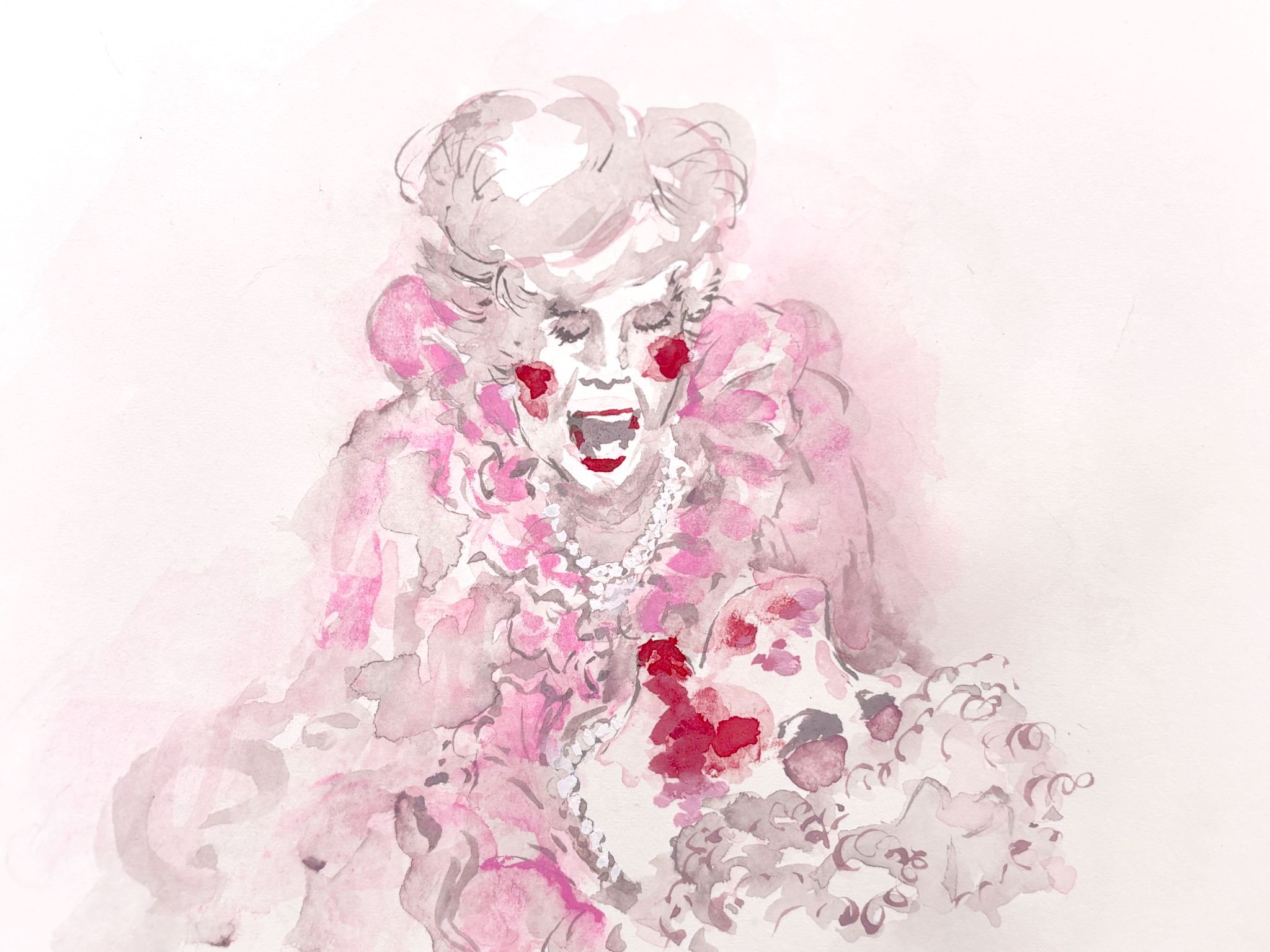
In this primal scene at the heart of The Muppets Take Manhattan, Miss Piggy and Rivers are portrayed as coworkers sharing a beauty counter in a New York City department store from which they purvey a fictitious French perfume, Quelle Difference, that is, “What a Difference!” Its Frenchness is in fact one of the only qualities to be exclaimed in their sales pitches to passerby: “Get your French perfume!” “It’s French!” “It’s feminine!” “It'll help you grab one of those rotten, stinkin' men!” The distilled potency and directness of these claims doubly signify smell as a predicating site for hysteria—anticipating materiality, action, and social consequence through the sensing and reacting to nascent, effusive indicators. Cixous and Clément make note of this esoteric dimension of Freud’s figuring of the hysteric: “The deep charge of smells, their separating role—acting to divide men and women—points out the collusion between moral and bodily values, down to the most intimate folds of the body. Evil smells good; good smells bad…Freud’s explanation for the disorders of the sense of smell that are associated with hysteria takes into account the importance of both wastes [‘rotten, stinkin’’] and of odors [‘Get your perfume!’].” (Cixous and Clement, 1986, p. 38) The contradictions of attraction and repulsion held in the perfumed text of their dialogue underscores the devil’s bargain of heteronormativity, at least those hysterical dimensions of it as a cultural matrix; even in the apprehension of a mate [“it’ll help you grab”], the structure of that attraction has already been compromised by decomposition, abjection [“rotten, stinkin’”]. These are the erotic, sensorial interplays which directly presage Piggy’s earnest inquiry of “Do you think I’m pretty?”—a rapt insecurity that fully interrupts the flow of the duo’s marketing slogans that promise remarkable difference.
Throughout this episode, both puppet and comedienne are enrobed in moire taffeta babydoll pink smocks with clownishly wide ruffled collars—rosy shopgirl uniforms-cum-pantomime-Pierrot frills which reiterate the Francophilic, gendered inflections of the language used to promote their perfume products. On the surface, the French marker can be attributed to the popularity and commercial viability of French perfumes of the period, with releases from Chanel, Dior, and Yves Saint Laurent topping the market. But considered in the context of costume and the eventual ‘over-writing’ of faces in cosmetic makeover, a reading across the grain of these signs becomes suggestive also of the écriture féminine theorized by Cixous along with Luce Irigaray and Julia Kristeva in the feminist French literary criticism of the preceding decade.
Lending material emphasis to Carnivalesque costumes smuggled out of French Rococo paintings by the likes of Watteau and Boucher, further embellished with a labial innuendo pervasive in Feminist Art of the 1980s when this film was released, their attire begs for a more substantive examination of fashion’s aptitude for articulating Lacan’s ‘extimate’ object—the externalization of intimate inner drives and desires, the spectacular dimensions of symptom, of sexuality in surplus. As much as the actors, setting, script, and choreography of the scene, Piggy and Rivers’ costumes conspire toward the psychoerotic reverie of their mutual hysteric—and perhaps liberated—demonstration, following on fashion historian Valerie Steele’s observation that, “The idea of clothing as a ‘deep surface’ is compelling, because fashion does seem to draw on unconscious emotions and fantasies, which are 'metamorphosed into symbolic form’ on the surface of the body.” (Steele, 2025, pp. 8–9) As with the puppeting and perfuming that establish the circumstances for this action, these garments’ signal as courtesan court jesters, exaggerating and stylizing elements of ruffled vulvas and physical comedy from which the culminating outburst of the scene issues.
Cixous and Clément track Freud’s association of a “schema of hysterical attacks” with a “clownic stage” wherein they “indulge themselves by seeking gratification in crazy capers and make pratfalls and impossible faces” (Cixous and Clement, 1986, p. 12)—an inner turmoil escalating toward the social in tragicomic outbursts precisely like the one in which we observe Piggy and Rivers indulge. The stakes of the scene and its consequences are in its publicness, situated in spaces of workplace, consumption, and public life: in other words, spheres historically regulated to be shielded from the influence of the feminine. That trespass is redoubled in its theatrical cinematic release as spectacular entertainment, itself a complex psychosocial mechanism by which the aberrant may be tamed and instrumentalized, “With the circus and cinema, we have moved into the institutionalization of hysteria: spectacle cashing in on the exchange of money…a space is made for cathartic identification, without possible contagion.” (Cixous and Clement, 1986, p. 13)
By the time of The Muppets Take Manhattan, spectacle had permuted across a multitude of increasingly visible and lucrative forms in Joan Rivers’ career: in the two decades preceding, she had established herself as an actor of screen and stage, a stand-up comedian, and an accomplished writer of quick-witted, timely jokes and of screenplays. In the year prior to this Muppets’ film, she hosted Saturday Night Live, performed at Carnegie Hall, and released a best-selling comedy album. Immediately following the Muppets project, she made history as the first woman to host her own late-night talk show on a major television network—although the program was cancelled by Fox within its first year. Nonetheless, her particular brand of brassy, louche comedy in her signature husky toned delivery was an established commodity in the entertainment industry, and an imminently known quantity of Rivers was her celebration of plastic surgeries and cosmetic procedures she began undergoing over a decade before her appearance opposite Miss Piggy in this scene.
As much as Rivers’ pioneering work as a woman who rose through the ranks of American comedy, it’s her unconventional beauty and the means of artifice and reconstruction by which it had been achieved that supplied impact to her turning up at a makeup and perfume counter in this scene. “I’m going to give you a complete makeup job!” she announces to Miss Piggy with all the elan of a mad scientist. While Rivers and Piggy’s shared exploits occur at a critical intersection of gender and wage labor—one of significant import as the department store and shopping as a pastime were key to legitimating women’s entry into public life a century prior—the performativity of the cosmetologist directs their action toward the trope of the filmic makeover, here hysterically reimagined. The makeover has served as a significant narrative stratagem in the lives of women told in cinema at least as far back as Irving Rapper’s 1942 film Now, Voyager adapted from the novel of the same name by Olive Higgins Prouty published the year prior. Reviving and riffing on stories of old like the Cinderella and Little Mermaid fairytales and Pygmalion and his statue come to life in Ovid’s Metamorphoses, the makeover in film places the onus of evolution onto a beleaguered heroine who must decide for herself to assimilate toward centralist conceptions of visual and sexual appeal in order to succeed in her life quest. In Now, Voyager, Bette Davis brings all of the smarts, vulnerability, and snark for which she is remembered to its main character who emerges from a downcast, homely lifetime into glamour, beauty, and transfiguration. From Davis’ caterpillar-to-butterfly performance, the makeover device proceeds to Audrey Hepburn in Sabrina, 1954; Audrey Hepburn in Funny Face, 1957; Audrey Hepburn in My Fair Lady, 1964; and subsequently such breakout cult performances as Cher in Moonstruck, 1987; Michelle Pfeiffer reborn as the unhinged vigilante Catwoman in Batman Returns, 1992; Rachel Leigh Cook in She’s All That; 1999, Anne Hathaway in The Princess Diaries, 2001 and in The Devil Wears Prada, 2006; throughout these iterations, the makeover operates as much as morality fable as it does wish-image, with the rewards of love, status, good fortune, and security reserved for those women who endure transformation and further submission to the beauty ideals upheld by male dominant systems of control. In their study of the makeover in Hollywood cinema, Elizabeth A. Ford and Deborah C. Mitchell chase down its eventual trappings, “At their worst, makeover films seek to calcify beauty and its reverse into a rigid set of signs…they incite us into frenzied acquisition, commanding women to be good little capitalists, to buy more expensive clothes and shoes…they try to make us believe in the damaging ancient assumption that women’s bodies are essentially unacceptable, and must constantly be tended.” (Ford and Mitchell, 2004, p. 204)
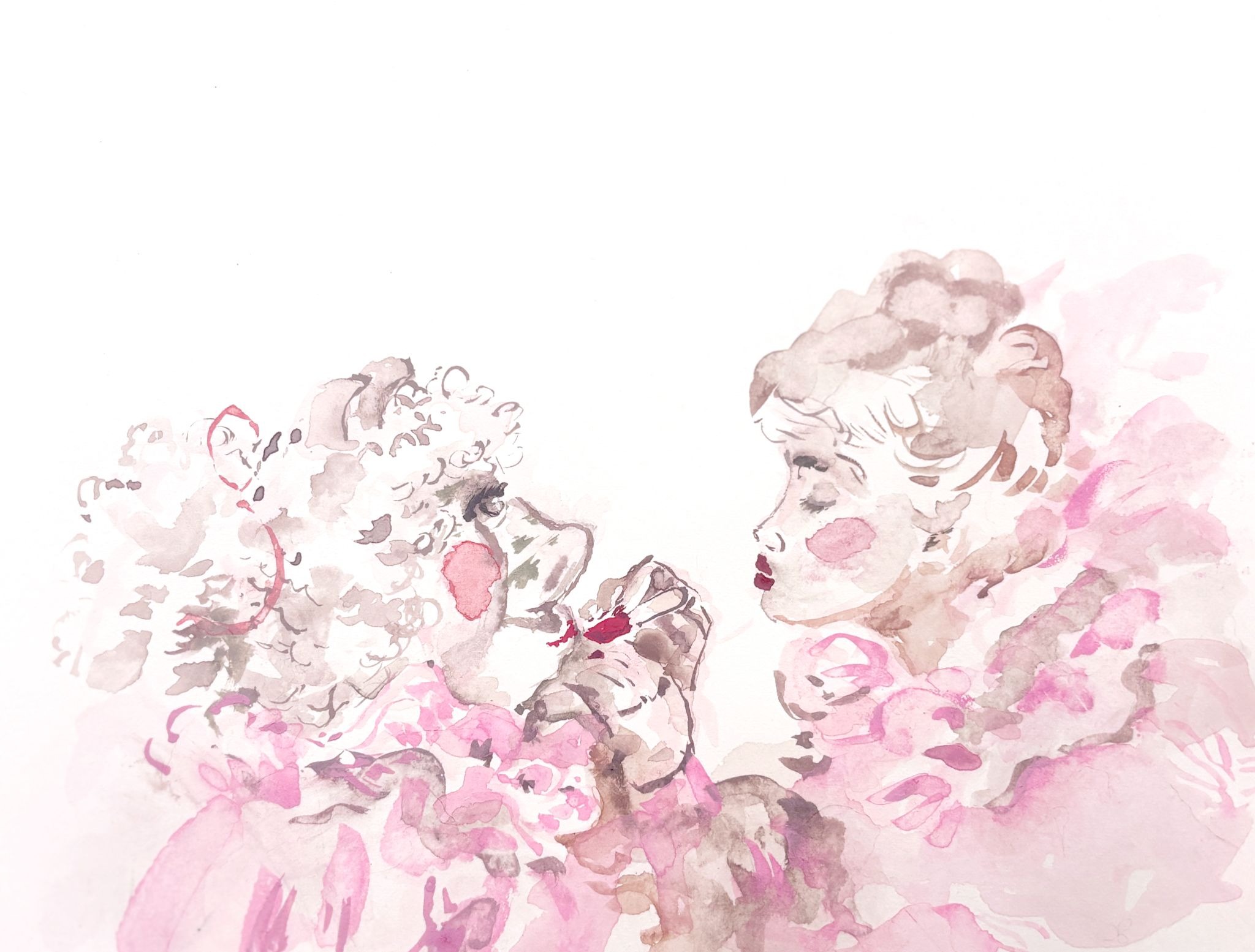
What Rivers initiates with Miss Piggy begins with recognizable mechanisms of the makeover as a storytelling device, applying rose-red blurs of rouge while simpering about visions of desirability, as any product-hocking beautician would. But her almost immediate detourning of blush, brow pencil, and lipstick signals a radical departure from any established teleology oriented to male gaze expectations; instead, exaggeration, parody, and abstraction are written with ecstasy and underlying indignation across both characters’ faces with smears and scribbles of red and brown accreting toward expressionistic fantasy. In the moment that they make leave of the codes and scripts for beautification, their excesses are translated into “another language,” an “alternative representation,” into a marker of hysterical symptom that may prove productive in its expression. As Julie Mitchell notes at the outset of her landmark Psychoanalysis and Feminism, “In the symptoms of hysteria (and with variations, those of the other two neuroses – obsessionality and anxiety), what is being expressed in another language is the repressed sexual idea which some crisis has re-voked; a symptom is an alternative representation of a forbidden wish which has broken through from the unconscious, whence it was banished, into consciousness—but in an ‘unrecognizable’ form.” (Mitchell, 2000, p. 10)
The break-through of repressed desire and break-down of recognition enacted through hysteria can function, crucially, as a development of an écriture féminine, an embodied grammar and erotic/ized syntax that here reinterprets the material traces of beautification into rupture and revolt: “Women must write through their bodies, they must invent the impregnable language that will wreck partitions, classes, and rhetorics, regulations and codes, they must submerge, cut through, get beyond the ultimate reserve-discourse, including the one that laughs at the very idea of pronouncing the word ‘silence,’ the one that, aiming for the impossible, stops short before the word ‘impossible’ and writes it as ‘the end.’” (Cixous, 1976, p. 886)
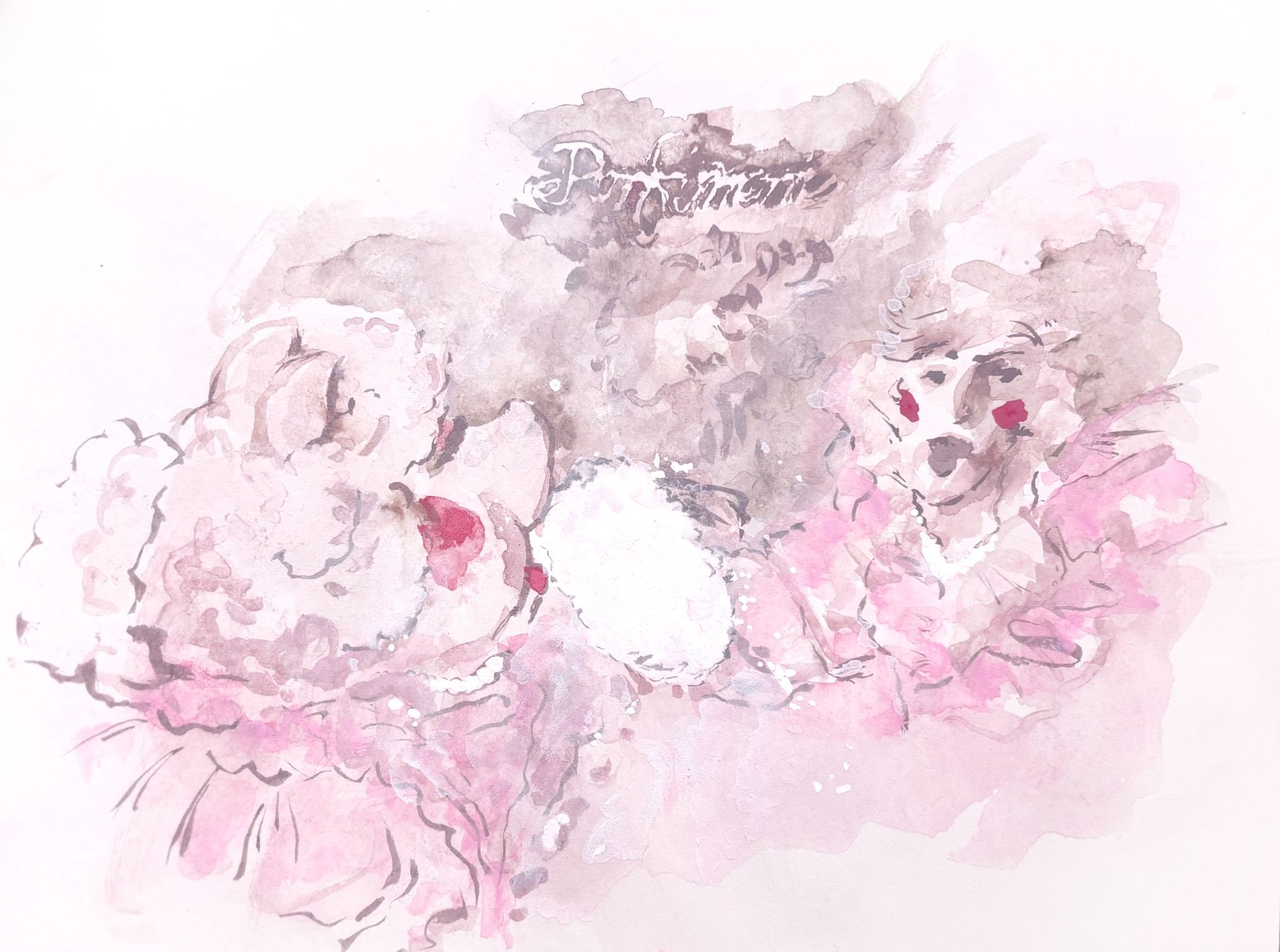
A careful evaluation of the immediate effects and latent potentialities of hysterical outburst as shown in the Muppets scene is warranted, for certainly these actors quite literally laugh back at threats of silence and ending. “A powder puff for you and a powder puff for me!” shrieks Rivers as she slaps them both about in a snowy cloud of face powder. Everyone on the department store floor has paused, sober and silent against the ensuing spectacle. As plumes and streaks of powder settle over product displays, pink ruffled smocks, and the faces of the scene’s two central characters, overwritten in stains of temptress-red lipstick, their stuffy male floor manager briskly approaches and announces that they are both fired. The two collapse in a madness of laughter as the scene cuts away to other derring-do elsewhere in the ensemble cast. Their termination uncovers the longstanding close range danger of the hysteria diagnosis within patriarchal society: not that one would be merely stigmatized, but expelled and obliterated. One can sense the nervy, encroaching attention a system of men have afforded women in the workforce, with hysteria as a most convenient and liberally applied recourse to return to a separation of the signs of woman and worker. This economic subjugation provides material consequence to the assured annihilation Sandra Gilbert attests to in her introductory analysis of Cixous and Clément’s The Newly Born Woman: “...the rebellious body/language[s] that manifests hysteria are culturally stylized channels into which excess demonically flows—excess desire, excess rage, excess creative energy—only to be annihilated by the society that drove it in such directions.” (Gilbert, 1986, p. xii) Reckoning with the very real and tangible punishments attached to the hysteric matters tremendously; the viability of productive rebellion and counternarrative world building will surely come with costs—chief among them the participation, provision, and belonging that comes with a social system, even one organized against one’s best interests.
Perhaps this is why the hysterical episode is rarely portrayed as agential, as choice rather than inevitable, entropic. The price of freedom is painful: look how quickly the doubts around Miss Piggy’s value within an enforced system of beauty standards escalated to the immediate loss of her means to earn wages and therefore survive the designs of her present systemic circumstances. And while ontologically, Piggy approximates the ageless resilience and immortality of a cartoon character, the implications for what a similar aesthetic and emotional mutiny could cost me or you give sobering pause. The hysteric’s appeal is in her intransigent resistance, in her otherness as a means of escape:
Is a disturbed, disturbing order reestablished by making the symptom disappear, or does it definitively annul the innovating force that is contained in the past but has become strange, foreign, other in the present? That is how the hysteric, reputed to be incurable, sometimes—and more and more often—took the role of a resistant heroine: the one whom psychoanalytic treatment would never be able to reduce. The one who roused Freud’s passion through the spectacle of femininity in crisis, and the one, the only one, who knew how to escape him. (Cixous and Clement, 1986, p. 9)
Miss Piggy and Joan Rivers share reputations as high femme icons who leverage being ‘too much’ toward hilarious and glamorous ends. They demonstrate a mobility in circulation that is afforded to effete irreducibility—and never more so than in their shared spiral through perfume, lipstick, powder, doubt, laughter, and hysteria. They traipse among the signs of ‘bad objects,’ ‘petit objet a’s, and unmatched designations for ‘otherness.’ They disturb the order and functions of scripts for femininity enforced onto women, and for that they are fired; they are let go—that is the knowledge they hold for “how to escape him.” In Gilbert’s close reading of Clément’s positioning of the archetypal sorceress and hysteric, she emphasizes the multivalent resistances that follow on pleasure, delight, and the uses of the erotic:
She excavates the assumptions that have oppressed and repressed female consciousness, alienating woman from the ‘dark continent’ of her own bodily self and channeling female desire into the flights of the sorceress and the fugues of the hysteric. The ‘way out’ of such a system, she declares, is through an escape that is also an attack: woman much challenge ‘phallo-logocentric’ authority through an exploration of the continent of female pleasure, which is neither dark nor lacking, despite the admonitions and anxieties of patriarchal tradition. Out of such a repossession and reaffirmation of her own deepest being, woman may ‘come’ to writing, constructing an erotic aesthetic rooted in a bisexuality that is…a delight in difference, in multiplicity, in continuous awareness of ‘the other’ within the self. (Gilbert, 1986, pp. xiv–xv)
To let go (of societal strictures, oppressions, projections, and expectations) and to be let go (from participation in and undermined support from those selfsame systems that oppress) is at least “a” “way out”. Mindful of Foucault et al’s admonition that there is no true outside of power, what is being escaped is a submission to ideologies that would question whether a feminine other thinks at all, let alone thinks “I’m pretty”; that is, a unilateral ideology regulated toward compulsory beauty, commodification of a self, and a comportment that behaves, that makes a spectacle only when entertainment is demanded from that feminine other. If we are to “make-up” a “way out,” the Piggy/Rivers makeover proposes it will appear as what Bracha L. Ettinger calls “a co-transformation-in-difference…in encounters where I and non-I co-emerge, co-change and co-fade.” (Ettinger, 2005, 705) I would venture that this is the substance of the hysteric, the “forbidden wish which has broken through from the unconscious”: this “continuous awareness of ‘the other’ within the self.” In their thinking together (“do you think”) and writing together with the cosmetic instruments of their site of encounter, Miss Piggy and Joan Rivers incite the “forbidden” and the “antiestablishment” in their “co-transfomation-in-difference.” Adorned in their vulva-like pink ruffles, when the powder settles and the employments have ended, what remains is a kind of birth of alterity, a “way out” into a femininity that exceeds its positioning as opposite or other within a masculinist binary.
There is an irony, if not tragedy, in Freud’s career-long analysis of women that yielded his late in life admission that their psychologies and most of all their desires alluded him. And yet, he persisted in his diagnoses of hysteria—surely in part because of the heterosexism that haunts (if not directs) his efforts, but perhaps too as a marker for where his language and comprehension failed him, faced with a language written from those desires in their excesses. The Muppets Take Manhattan is likewise a comedy that approaches failure and disappointment as a recurrent theme across its narratives, tragic, or at least pensive around possibilities that diverge from those its characters knowingly pursue.
As I reflect on my early encounters with this film and the ways it was instructive in femininities that are unmanageable, flamboyant, camp, hysterical, I find trenchant association to a note Freud made in his treatment of a patient he called Frau Emmy who was being treated for neurotic symptoms and who would recount recalcitrant symptoms of one of her female children, Freud reporting, “This child, she said, had been very queer for a long time; it had screamed all the time and did not sleep [with] very little hope of curing.” (Freud and Breuer, 1956, p. 60)
I too am a child who has been very queer for a long time, and these hysterical performances of Miss Piggy and Joan Rivers were formative among the forces by which I am constituted as such. The post-human co-emergence of their subjectivities is very queer; the Francophilic genitalia regalia with which they are costumed is very queer; their détournment of cosmetics is very queer the way drag queens and the makeup campaigns that Serge Lutens made for Dior and New Romantic club kids are; their “spectacle of femininity in crisis” and their Medusa’s laughter with which they speak-and-act-and-write back to male authority is very queer. And with perfume and lipstick and powders in hand—even a hand sheathed in a glamorous pig puppet—those who are hysterical and very queer will refuse curing, will be screaming for a long time.
Acker, Kathy. (2002) “from ‘Algeria’: Cunt. (1984)” Essential Acker. Ed. Amy Scholder, et al. New York: Grove Press.
Bender, Lauretta and Woltmann, Adolf G. (1936) “The Use of Puppet Shows as a Psychotherapeutic Method for Behavior Problems in Children.” The American Journal of Orthopsychiatry. Vol. VI, No. 3, July 1936.
Brunner, Raven. (2026) “Emma Stone Shuts Down Rumor She'll Play Miss Piggy in Her Movie with Jennifer Lawrence: 'Why Would I Play a Literal Star?'” People. 6 January 2026.
https://people.com/emma-stone-shuts-down-rumor-she-ll-play-miss-piggy-in-her-movie-11879947
Cixous, Hélène. (1976) “The Laugh of the Medusa.” Signs, Vol. 1, No. 4. Summer 1976.
Cixous, Hélène and Clément, Catherine. (1986) The Newly Born Woman. Minneapolis: University of Minnesota Press, 1986.
Copjec, Joan. (2004) Imagine There's No Woman: Ethics and Sublimation. Cambridge: MIT Press.
Ettinger, Bracha L. (2005) “Copoiesis.” Ephemera: Theory & Politics in Organization. Vol. 5, 2005.
Ford, Elizabeth A. and Mitchell, Deborah C. (2004) The Makeover in Movies: Before and After in Hollywood Films, 1941–2002. London: McFarland & Company.
Freud, Sigmund, letter to Marie Bonaparte, quoted in Jones, Ernest. The Life and Work of Sigmund Freud. New York: Basic Books, 1955.
Freud, Sigmund and Breuer, Josef. (1956) Studies on Hysteria. London: The Hogarth Press.
Gilbert, Sandra M. (1986) “Introduction: A Tarantella of Theory.” The Newly Born Woman. Minneapolis: University of Minnesota Press.
Greig, James. (2025) “Miss Piggy, Diva, fashion icon and feminist pioneer.” DAZED. 7 November 2025.
https://dazeddigital.com/life-culture/article/69041/1/miss-piggy-diva-fashion-icon-feminist-pioneer-emma-stone-jennifer-lawrence
Mitchell, Juliet. (2000) Psychoanalysis and Feminism. New York: Basic Books.
Miss Piggy. (2015) “Miss Piggy: Why Am I a Feminist Pig?” Time. 4 June 2015.
https://time.com/3908787/miss-piggy-feminist/
Specter, Emma. (2026) “From Ringlets at the Oscars to a Vivienne Westwood Wedding Dress, Miss Piggy Breaks Down Her Life in Looks.” Vogue. 3 February 2026.
https://.vogue.com/article/life-in-looks-miss-piggy
Steele, Valerie. (2025) Dress, Dreams, & Desire: A History of Fashion and Psychoanalysis. London: Bloomsbury.
Turner, Lauren. (2026) “The Muppet Show revival brings nostalgia and naughtiness, critics say.” BBC. 4 February 2026.
https://bbc.com/news/articles/cjdjm7j0y52o